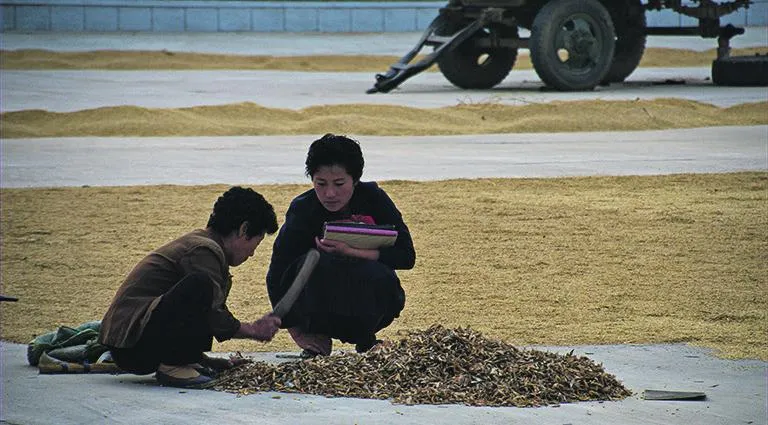
A Christian woman from North Korea has successfully escaped from her country five years after her first attempted defection, having spent time in prison and re-education camps.
So Young, whose name has been changed for security reasons, was returned to North Korea, after escaping the first time, by the Chinese authorities. China does not view North Korean defectors as refugees who require protection, but as illegal immigrants to be returned.
Returning defectors are interrogated, and if they are found to be sympathetic to Christianity, they are punished. Young was alone when she was stopped by the Chinese authorities and denied her involvement in anything related to Christianity.
Once she was returned to a police station near her hometown, Young, who had married and had a child with a Chinese man, was interrogated for months in prison, and unfairly tried, without being provided with a defence lawyer. She was sentenced to five years in a re-education camp, but would have been sent to a labour camp for political prisoners if her Christian faith had been discovered.
Young told her story to Open Doors, the Christian charity which supports the persecuted church. Recounting the trial, Young said: ‘The whole hearing took only 15 or 20 minutes. Then I received the maximum sentence: five years forced labour and re-education. I didn’t feel anything when he pronounced his sentence. I knew this was what was waiting for me. I wasn’t brought to the labour camp immediately. I spent ten more days in prison. During that period, you can appeal the sentence, but nobody does that. There’s no point.’
Young made wigs in the camp and slept on a floor with other women, after receiving daily ideological training for two-and-a-half hours every night. Conditions were harsh; if anyone in Young’s area failed to meet their weekly quota of duties, or if someone was found with prohibited items, the entire group was punished, sometimes by being made to stand in the rain for two or three hours.
Young told Open Doors about the most harrowing experience she had in the camp: ‘It was after only a few days in the camp. I was ordered with three other prisoners to bury a 25-year-old girl who had died. I had to hold her by her hair and head.
‘Sometimes when I was ordered to go outside to get wood from the mountains, I came to the place where many people were buried. I saw so many bones. This place where I was living was the most horrible place on earth. I really didn’t want to die here.’
After two-and-a-half years, Young was released after becoming a ‘model prisoner’. She reunited with her husband, who thought she was dead, and her 18-year-old son, who she barely recognised, as he had been 13 the last time they had met.
A few years later, she escaped from the country again, and this time was successful. After a difficult journey which included a nine-hour mountain climb, evading armed authorities, and travelling from China to Thailand, the family eventually reached South Korea, where they now safely live.
Open Doors estimates that there are 400,000 Christians amongst North Korea’s population of 26 million. The country ranks first in their watchlist of hardest countries in which to be a Christian.
Their website says: ‘Being discovered to be a Christian in North Korea is effectively a death sentence. Either believers will be deported to labour camps as political criminals – where they face a life of hard labour which few survive – or they are killed on the spot. The same fate awaits family members. There are believed to be tens of thousands of Christians held in labour camps across the country.’