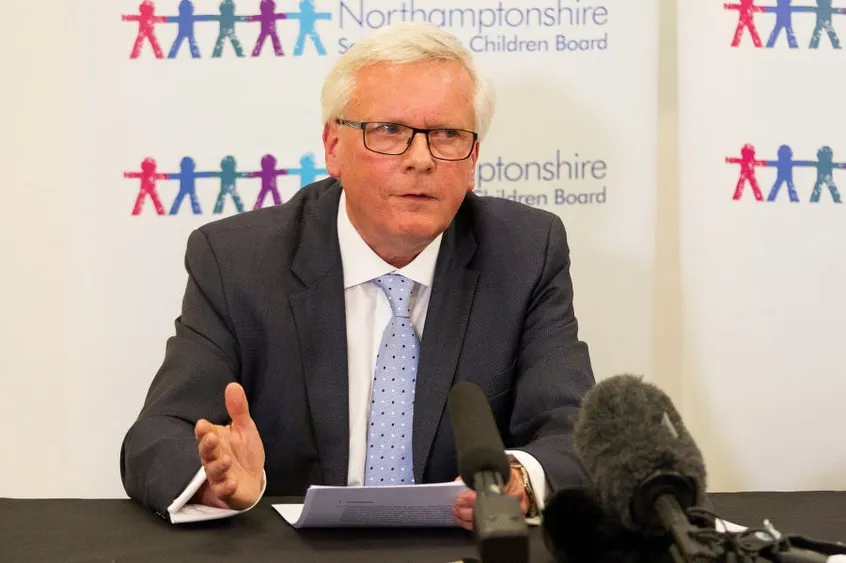
Key findings of the Makin Report
The 'key findings' of the Makin Report (see news item here) are as follows and readers should be aware that some of the details are deeply distressing:
'John Smyth was an appalling abuser of children and young men. His abuse was prolific, brutal and horrific. His victims were subjected to traumatic physical, sexual, psychological and spiritual attacks. The impact of that abuse is impossible to overstate and has permanently marked the lives of his victims. John Smyth’s own family are victims of his abuse.
'John Smyth's activities were identified in the 1980s. Despite considerable efforts by individuals to bring to the attention of relevant authorities the scope and horror of Smyth's conduct, including by victims and by some clergy, the steps taken by the Church of England and other organisations and individuals were ineffective and neither fully exposed nor prevented further abuse by him.
'Church officers and others were made aware of the abuse in the form of a key report in 1982 prepared by the Reverend Mark Ruston. The recipients of that report participated in an active cover-up to prevent that report and its findings – including that crimes had been committed - coming to light. There is no excuse or good explanation that justifies that decision. Different – and we strongly suspect better, for subsequent victims – outcomes would have followed had appropriate reports to the police and other statutory authorities been made then.
'In line with the ToR [Terms of Reference], we have placed the actions of individuals and Church bodies in context, and considered against the standards of practice which applied at the relevant time. An argument which has been offered in order to partially explain John Smyth’s abuses is that they were examples of over-enthusiastic corporal punishment. The conclusion of the Review is that he committed criminal acts of gross abuse.
'Further abuse could and should have been prevented. John Smyth's victims were not sufficiently supported by the Church and their views on escalating his abuse to the police and other authorities were not sought.
'In the period between 1984 and 2001, at which time John Smyth relocated to Zimbabwe and subsequently South Africa, Church officers knew of the abuse and failed to take the steps necessary to prevent further abuse occurring. Throughout this period – and particularly given the Church's adoption of formal safeguarding policies from 1995 – the Church had sufficient knowledge of the abuse to have taken those steps.
'The requirements of the safeguarding policies adopted by the Church, coupled with the moral and legal responsibilities to which Church officers were subject, demanded that more be done.
'There were individual failings by senior clergy, and clergy who subsequently became senior. That grouping includes a former Archbishop of Canterbury, Diocesan Bishops and Canons and Reverends.
'Following specific developments in 2012, from July 2013, the Church of England knew, at the highest level, about the abuse that took place in the late 1970s and early 1980s. John Smyth should have been properly and effectively reported to the police in the UK and to relevant authorities in South Africa. This represented a further missed opportunity to bring him to justice and may have resulted in an ongoing and avoidable safeguarding threat in the period between 2012 and his death in 2018.
'The Church's reaction to the expose of John Smyth's abuse by Channel 4 in February 2017 was poor in terms of speed, professionalism, intensity and curiosity. The needs of the victims were not at the forefront in terms of thinking and planning; the response was not trauma-informed.'
Conclusions of the Makin Report
'John Smyth is, arguably, the most prolific serial abuser to be associated with the Church of England. These abuses spanned a long period of time (from the mid 1970s until close to the time of his death in August 2018), in three different countries and involving at least 115 and possibly as many as 130 boys and young men. The earliest evidence of John Smyth making an abusive approach was in 1971, involving a 14 year old boy.
'The abuses in the UK (against somewhere between 26 and 30 boys and young men, plus others who were “groomed” and psychologically abused) were fully revealed to a small number of men in early 1982 (by the production of the 1982 Ruston Report) and actions should have been taken, at that moment, to report the abuses to the Police and other statutory authorities.
'A decision was actively made by this small group to cover the abuses up. The reasons given for this cover-up have been analysed in this Review and the conclusion reached is that they were not legitimate. John Smyth could and should have been reported for his abuses then and this would have led to a different set of outcomes, even if he was not prosecuted at that time. Everything else that unfolded thereafter was as a direct result of this decision to hide the abuse. There is also some evidence that his abusive behaviour was known to a few people prior to early 1982. It is certainly and irrefutably the case that people were sufficiently suspicious of his behaviour to take actions to contain and curtail his contacts with boys and young men at this early point in time. Greater professional curiosity and a greater attempt at challenging John Smyth, prior to 1982, could have led to his abuses being uncovered at an earlier point in time. Some of these people were Church officers and include Chaplains at Winchester College and ordained Clergy engaged with the Iwerne camps.
'Between the abuses being revealed to this small group in early 1982 and John Smyth’s departure to Zimbabwe in July 1984, some informal attempts were made to warn people of the 227 safeguarding danger that he posed to boys and young men. The leaders of a Church he tried to join in Southampton and the leaders of a theological College (Trinity College, Bristol) he studied at were warned about him. A summary of the Ruston Report was shown to them, detailing the nature and extent of the abuse that he perpetrated, this did not lead to any further action or reporting that prevented further abuse.
'Church officers knew of the abuses in this period and should, even by standards of that time, have reported this to the police. These Church officers were aware that the abuse was in breach of the law at that time. Active decisions were made by individuals and by the group of people who were shown the Ruston Report not to report the matter to the police nor to any other authorities and, on the evidence, we have seen, few, if any, formal attempts were made to alert people in senior positions in the Church. A victim of the abuse has reported to this Review that a Bishop was told of the abuse by one of the people sighted on the Ruston Report, but there is insufficient corroborating evidence to confirm this. On the balance of probabilities, it is very likely that this was, indeed, the case. The Bishop referred to is now deceased. This can be summarised as a ‘cover-up’ likely to be explained in terms of concerns for the reputation of those individuals as well as the Iwerne Trust and its related activity, in the guise of concerns about the welfare of the victims, their futures and their families. Only a handful of parents were consulted at any stage of the decision making by this group of Church Officers. Information about the abuse was discussed by many individuals, Church Officers, senior and junior, included over the course of future years and decades.
'In this period, John Smyth tried for ordination in the Church of England. Church records are incomplete and the details of this ordination attempt, or attempts, cannot be confirmed. It looks very likely, based on the evidence that we have received (including first-hand accounts from family members) that he made attempts at ordination in several places and got as far as the ACCM selection committee on one occasion at least; victims tell of John Smyth’s adverse and angry reaction to be being turned down. The reasons for this refusal are not recorded, but it is reasonable to assume that either something was known of John Smyth’s abuse or he was considered to be unsuitable on account of something else. A diocesan Bishop will have been involved in these processes; it is likely that this was a further opportunity missed in the 1980s to prevent John Smyth from abusing many more victims in future.
'On the evidence available, it is not possible to say whether John Smyth was actively encouraged to leave the UK and to move to Zimbabwe in 1984. There is robust evidence that confirms he was advised he should consider moving away (either to another part of the UK or to another country) but it is not clear whether there was an organised attempt to relocate him. He was enabled to move to Zimbabwe, with financial support from a wide range of sources, and this continued beyond the 1980s with financial contributions from Church officers and others.
'No evidence suggests that any consideration of risk was given, at any point in this, regarding the danger John Smyth posed to his own family, including his own young children and his wife. Very sadly, it is now known that he seriously physically and psychologically abused his son from the age of seven.
'Some attempts were made to warn people of the dangers posed by John Smyth before his departure to Zimbabwe and whilst he was living there. These attempts were informal, weak and ineffective, and seriously undermined by the fact that they were made within the context of an overall cover-up of the abuses in the UK. Despite warnings, he went on to establish a Mission and to set up camps for boys. He then abused boys in his care. Several attempts were made to stop him, including the dramatic decision of the entire UK Board of the Zambesi Trust to stand down in 1989, based on their concerns about John Smyth’s use of physical punishment and nudity. Funding and support for him and his camps continued, both from the UK and from the Zambesi Trust in Canada.
'We conclude that... in the period leading up to John Smyth departing to Zimbabwe – the period between the late 1970s and July 1984 - that Church officers knew of the abuse. Further abuse could and should have been prevented, there was a legal and moral imperative at that time that would have been present for those Church officers who knew of the abuse to report the matter to the relevant authorities. This is despite the lack of a safeguarding policy within the Church at the time. Victims of the abuse were not supported sufficiently, and their views were not directly sought on action to be taken including whether the abuses should have been reported to the police and other authorities.
'Church officers continued to make informal and unsuccessful attempts to alert individuals in Zimbabwe to the danger that John Smyth posed. At the heart of this one person, primarily, was most responsible for not taking sufficient action to ensure that John Smyth could go on to continue to abuse boys and young men. This is David Fletcher. He was instrumental in the coverup of the Ruston Report in early 1982 and then continued to make unsuccessful and weak attempts at alerting people in Zimbabwe. This Review gives evidence of the fact that a growing number of people knew of John Smyth’s abuses in the UK, some of them being told directly by David Fletcher, both before John Smyth’s departure for Zimbabwe and also after he had left and was in the process of establishing a Mission, which led on to the creation of camps where he continued his abusive behaviours. Other Church officers were aware of this and made some attempts at curtailing John Smyth’s activities.
'John Smyth visited the UK on a regular basis and maintained contact with his supporters who were Church officers, and other individuals throughout his time in Zimbabwe, while abuse of children was taking place. On these visits, he met with funders and approached potential funders and fundraisers. The Review includes many examples of funding being provided for John Smyth’s Missionary work, both via the Zambesi Trusts in the UK, Canada and Zimbabwe and from individual supporters as well as members of Church of England congregations.
'John Smyth’s abuses at the camps in Zimbabwe were revealed and attempts were made to prevent him from continuing. He was challenged by people in Zimbabwe and contacts were made with people, including Church officers in the UK, by those trying to stop him. The tragic and suspicious death of a 16-year-old boy, Guide Nyachuru, at one of the camps led to an attempt at convicting John Smyth for culpable homicide. Senator David Coltart thoroughly investigated John Smyth’s abuses, with a total of 14 affidavits from those John Smyth abused being drawn up for presentation to the court, in a separate prosecution. People in the UK, including Church officers, were very aware of these attempts at bringing John Smyth to justice in Zimbabwe. At any point in this period, any one of those people could and should have taken the initiative to report John Smyth to the police for his abuses in the UK. His UK abuses were well known to many people in Zimbabwe by 1995 and the number of people being aware steadily grew until he left Zimbabwe to move to Durban in South Africa in 2001.
'We conclude that ... in the period between John Smyth moving to Zimbabwe and subsequently moving to South Africa - July 1984 until September 2001, Church officers in the UK and in Zimbabwe knew of the abuses committed both in the UK and in Zimbabwe, and failed to act comprehensively enough to the abuse to prevent further harm to children. The numbers of people (including Church officers) having an awareness of these abuses and taking insufficient action to prevent further abuse occurring, grew. The UK abuses could and should have been reported to the Police in the UK in this period, especially given the fact that the Church of England began to adopt safeguarding policies from 1995 onwards and the general awareness of safeguarding in the UK was greatly increased, with relevant guidance and legislation being introduced throughout this period. Senior people within the Church of England were alerted to the abuses in both the UK and in Zimbabwe, including diocesan Bishops and insufficient action was taken in response to those alerts. Church officers knew enough (in the UK and in Zimbabwe) for them to take actions to report these abuses, either within the requirements of the policy in place at the time or within the moral and legal responsibilities they carried. Some of these were senior Clergy at the time with others going on to take senior Clerical positions within the Church. These include a former Archbishop of Canterbury, Diocesan Bishops and Canons and Reverends.
'After 2001, John Smyth lived in South Africa, firstly in Durban and then, from early 2005, Cape Town until he died in August 2018. The Review findings are that, between 2001 and 2012, although many people knew of his abuses in both the UK and Zimbabwe and some evidence of disquiet about his potential abusive behaviours post-2001, John Smyth was effectively “under the radar”. He was not subject, during this period, to challenge, even though he continued to receive support, including financial support, from Church officers, other Lay people and Church institutions in the UK and the Zambesi Trust in Canada and the UK.
'Awareness of John Smyth’s abuse changed in 2012. There was an oblique reference made by a journalist, a direct approach made to the Titus Trust about him by someone closely associated with the Iwerne camps and a victim sought help from a fellow victim who was also a Church officer in that year. There were opportunities missed, by Church officers and others, in 2012 and 2013, to explore these concerns and to ensure it was reported to the Police. The Titus Trust governing body was actively misled by two Trustees, one of whom being a prominent Church officer. Church officers in the diocese of Ely took insufficient action when alerted to these concerns and opportunities were missed to formally report to the Police and to follow up on a letter sent by Stephen Conway to Thabo Makoba in South Africa.
'Justin Welby was personally alerted by the Diocesan Bishop of Ely to these concerns and the Review explores which further actions he could and should have taken in response, particularly in his role as the senior leader of the Church. A core group reviewed the actions of Justin Welby were investigated by a Church Core Group, concluding that these were consistent with the policies in place at the time. The Core Group however, also concluded that he may be under a greater obligation to have done more, and this Independent Review was tasked to explore the matter. Hence our analysis and conclusion. The steps required to prevent further abuse and harm in South Africa were not taken and therefore an opportunity was missed again for this abuse to be reported to the Police by a Church officer.
'We conclude that ... John Smyth could and should have been formally reported to the police in the UK and to authorities in South Africa (Church authorities and potentially the police) by Church officers, including a diocesan Bishop and Justin Welby in 2013. Had that been done, on the balance of probabilities, John Smyth could have brought to justice at a much earlier point than the subsequent Operation Cubic investigation by Hampshire Police in February 2017. Opportunities to establish whether he continued to pose an abusive threat in South Africa were missed because of these inactions by senior Church officers.
'Following these opportunities missed by Church officers to fully investigate, follow up and, indeed, report John Smyth to relevant authorities, a period of some three years elapsed in which John Smyth could and should have been investigated, with attempts made to establish whether he still posed a safeguarding threat in South Africa. Although the Church (by definition, Justin Welby was aware) knew that at least three people were victims of John Smyth, no actions were taken to help them in a therapeutic way, nor to find out if the numbers of people abused was greater. When the abuses were exposed by the Channel 4 programmes in February 2017, the response to calls for help and support from victims was very slow. The Core Group, which was tasked with coordinating this response, was poorly organised and unprofessional in its working methods. Breaches of confidentiality and a confusion of purpose have been explored and evidenced in this Review. Promises by Justin Welby to meet with victims were not followed through in any meaningfully helpful period of time.
'We conclude that ... - in the period mid-2013 to the end of 2016 - Church officers did not follow through on Police reports or in seeking to establish whether John Smyth still posed a safeguarding threat, did not support the victims known of by then and did not make an attempt to find out if more victims were involved. From the middle of 2013, it must be concluded that the Church of England (by any reasonable definition) knew of the UK and African abuses and did not do enough, by any reasonable measure, to investigate properly nor offer support for those who had been abused, both in the UK and in Africa. The reaction of the Church to the Channel 4 exposé in February 2017 was poor in terms of speed, professionalism, intensity, and curiosity The response was not trauma informed and the needs of the victims were not at the forefront of the thinking and planning.'
Help and support
If you or anyone you know is affected by the Makin Report in any way, help is available via
FearFree Support, which provides specialist support to victims and survivors of abuse, offering trauma informed and victim led bespoke support. Its head of services has identified an experienced independent advocate for victims and survivors to deliver this service. Contact: nicky.gahagan@fearfree.org.uk telephone 07436795205 (TuesThurs)/helpdesk 01793 317482 during working hours.
Safe Spaces helpline on 0300 303 1056 and safespacesenglandandwales.org.uk; Samaritans helpline-116-123;
Guilt & shame: The gospel is big enough to address both
Note: this article contains references to abuse.When Leanne first shared her story in our women's group, the room fell …