The consultation on a conversion therapy ban in England and Wales has been published, but raises many questions that have yet to be clarified.
The government has proposed a two-pronged approach to a ban. Firstly, giving sentencing courts power to impose tougher sentences for physically violent criminal acts that are motivated by conversion therapy.
Secondly, a new offence would prohibit ‘talking conversion therapy’ which would require a coercive or control element; and be motivated by conversion therapy – which is defined as having the ‘intention of changing a person’s sexual orientation or changing them to or from being transgender’. The proposals are universal, with the intention that the proposed ‘protections’ would extend to attempts to change a person from, for instance, transgender to their real gender.
However, the consultation makes clear that ‘talking conversion therapy could not be reasonably understood to include communication such as casual conversations, exchanges of views, private prayer or pure speech acts’.
Under the proposals, adults will be able to give informed consent – but not under-18s. The consultation document does not define what is meant by ‘talking conversion therapy’, nor does it define the extent of prayer that would amount to ‘private prayer’.
LGBT Anglican activist Jayne Ozanne, who has long campaigned for an outright ban on all forms of conversion practices, has made clear her belief that even ‘gentle non-coercive prayer’ should be made a criminal offence.
Simon Calvert of the Christian Institute and chair of new campaign group, Let Us Pray, said: ‘Sadly, what’s happening is that some activists are cynically redefining ‘abuse’ to mean Biblical teaching. The government proposals to outlaw conversion therapy appear balanced, but the devil is in the detail.
‘It’s very important that government has made pledges to protect the ordinary work of churches. Whilst their pledges are welcome, Christians are going to be concerned about the details. It’s not absolutely clear whether the particular model the government has chosen will deliver on those pledges to protect gay people from abuse, while at the same time protecting religious freedoms.’
Calvert highlights another concerning aspect of the proposals – ‘that activists on the other side want much more than the government is promising. They’re not embarrassed to demand the effective criminalisation of Evangelical theology’.
The consultation closes on Friday 10 December. The documents related to the consultation can be found here and the consultation can be found here.
Meanwhile, gender ideology is an increasingly polarising issue. In Scotland, Stonewall has successfully persuaded the Scottish Government to remove the term ‘mother’ from its maternity policies. Its policy toolkit has replaced ‘mother’ with gender-neutral terms – ‘parent who has given birth’.
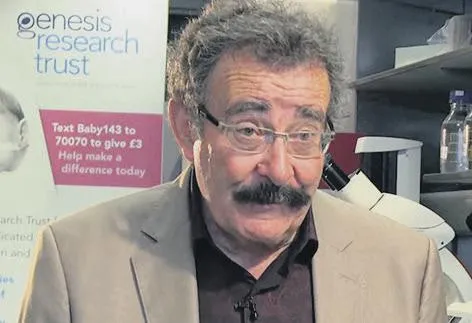
Speaking on BBC Question Time, Professor Robert Winston (see photo) commented that stating biological fact will get you hate mail. He said: ‘I will say this categorically, that you cannot change your sex. Your sex actually is there in every single cell in the body’.