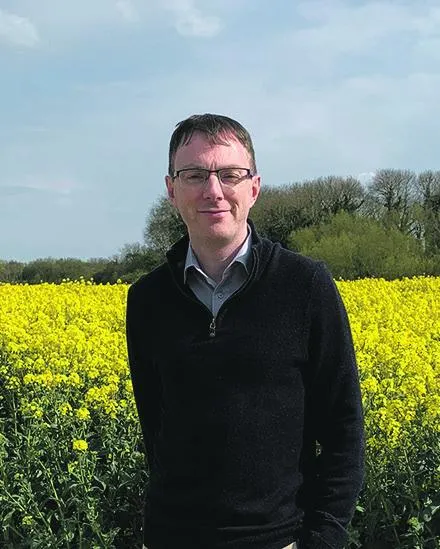
Donald John is an elder at Cambridge Presbyterian Church and President of Westminster Seminary UK as well as Professor of Historical Theology. He is also a trustee of the Banner of Truth and Tyndale House.
1. How did you become a Christian?
I was born and raised in a Christian home in Inverness and baptised as an infant. The Christian faith was lived out daily in our home, and in God’s kindness my life has really been one of growing up gently in the faith. Always knowing I am a sinner, knowing that Jesus is the Saviour of sinners, and as a result not knowing a day when God has not been my God.
2. What lessons have you learnt since that you would want to pass on to a younger Christian version of yourself?
The weight the Bible places on character relative to doctrine. Doctrine is indispensable, and ultimately character flows from doctrine. But, in terms of the priorities of Scripture, not being ‘arrogant or quick tempered’ and being ‘a lover of good, self-controlled, upright, holy and disciplined’ sits equally with ‘holding firm to the trustworthy word as taught’ (Titus 1:7-9). The longer I serve in the church, the more I see the importance and blessing of godly character.
3. How would you describe your prayer life?
To a degree, I am sure we all desire to more fully live out a spirit of continual prayerful dependence on God (1 Thess. 5:16-18). Prayer is both a great joy and a continual challenge. Trying to have set times for personal and family prayer helps, but a frame of mind which sees our continual need and the great delight the Father has in our prayers, is the big thing. Despite my prayer life being far short of what it should be, I am continually encouraged in prayer by the promises of God’s word (James 5:16b) and by gracious answers to prayers.
4. Which two or three Christian books apart from the Bible have most influenced your faith?
John Murray’s Redemption Accomplished and Applied is wonderful in unpacking the riches of salvation. Hugh Martin’s The Shadow of Calvary unfolds the experience of Christ in the lead up to the cross in an insightful and moving way. And, to prove that I don’t think every good book is Scottish(!), J. Gresham Machen’s Christianity and Liberalism is powerfully written and (sadly) perennially relevant.
5. Who or what have been your biggest Christian influences?
Theologically, it would be John Murray – a model systematician blending together personal piety, exegetical rigour and theological faithfulness. Personally, my father, who models a life of living for God and not the praise of men, and Doug and Peter, fellow elders in Cambridge Presbyterian Church whose preaching and godly service in the church are such an example to me.
6. What are the main challenges you believe Christians face today?
John Owen said: ‘Unacquaintedness with our mercies, our privileges, is our sin as well as our trouble’. Underlying every other challenge we face (e.g. lack of evangelistic passion, navigating a hostile culture, etc.) is the main challenge of believing the wonders of what our Triune God has done for us ‘in Christ’. It is as we ‘behold our God’ that we will find the strength to face every other challenge with Christian grace.
7. What encourages and what discourages you?
I’m encouraged by the promises of God, His ongoing work in the world, lives transformed by the gospel.
I’m discouraged by gifts being prioritised in the church over graces – in the long run this only damages the work of the kingdom.
8. What makes you laugh?
The classic BBC comedies Yes, Minister and To the Manor Born.
9. What would you want to say to the wider evangelical world?
Prioritise worshipping together as God’s people. The cultural climate is more hostile (though that creates opportunities) than in recent generations. In response we need to be together as the church (Heb. 10:25) so that God’s word can do its sanctifying work in us. This is really a plea for, wherever possible, gathering twice on a Sunday and once midweek. And as families, give time daily to read the word and pray together.
10. Which Biblical person (other than Jesus) do you most look forward to meeting in glory and why?
It depends where in the Bible I am preaching! At the moment it’s through the life of David. He has so many incredibly serious failings, but God’s grace shines brightly, and God’s redemptive purposes (culminating in Christ) advance through him. So, for now, David.