Olympics then and now: What can Eric Liddell teach us today?

Luke Randall  |  Features
Date posted:  1 Jul 2024
Share Add       
Olympics then and now: What can Eric Liddell teach us today?

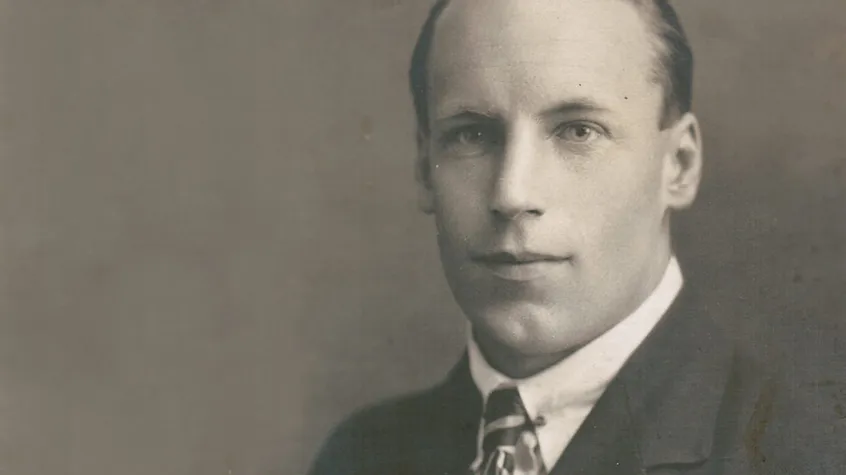
Eric Liddell

The Olympic Games are almost upon us. They start in Paris on 26 July and countless storylines will inevitably surround what is arguably the world’s biggest sporting event.

Can Novak Djokovic finally claim the gold medal, the one accolade which has eluded him during his glittering career, in what is surely his last realistic chance to win it? Can Tom Daley win a fifth Olympic medal? Can Simone Biles become the most decorated American gymnast in Olympic history? These are just some of the headlines which will fill papers around the globe as the games draw near.

However, perhaps the Games’ return to Paris should point Christians towards an even more remarkable story from the past; one of humility, loyalty and courage which we can take inspiration from.

2024 marks the centenary of the gold medal won by Scottish runner, Eric Liddell, at the Paris Olympics of 1924. Liddell won gold in the 400-metre race, setting a new world-record time, and his story is one of a humble man from ordinary beginnings, who showed remarkable devotion to the Lord amidst immense pressure to compromise on his beliefs.

Liddell’s story has never been more important or relevant, as we live in an era which sees Christian principles too easily compromised, or altogether disbanded, for the sake of an easier time from others – a problem which now extends right to the top of several of Britain’s most historic church denominations.

Eric Henry Liddell was born on 16 January 1902 in China to missionary parents, James (a minister) and Mary Liddell, who worked with the London Mission Society. He had a brother and sister, and was a boarder with his brother at Eltham College in southeast London, (which today has a sports centre named after him) before attending university in Edinburgh, studying for a BSc in Pure Science.

While there, he excelled at playing rugby and running. He was capped seven times as a Scotland rugby international between 1921 and 1923, and some wonder if he might have become a member of the Grand Slam winning team of 1925.

However, Liddell could not continue to focus on both sports, so chose athletics, and quickly became one of Scotland and Britain’s best runners, regularly winning national competitions at several distances.

Liddell became well-known for his unique and unorthodox running style; he ran with his head back, mouth wide open and arms flailing. On an occasion in Glasgow, Liddell was seen to be a long way behind his competitors in a race, and a member of the crowd pointed this out to one of his supporters, to which the supporter replied in a very Scottish way: ‘Aye, but his heid’s no back yet!’ Predictably, Liddell did go on to win the race.

Liddell’s early success at home ensured his selection to run in the 100 and 200 metre races at the Paris Olympic Games in 1924, achieving his major sporting motivation. However, the 100m heats were to take place on a Sunday, and this was a major problem for him, as he took the observance of the Sabbath day as the Lord’s Day very seriously, his faith never having faltered since his Christian upbringing by his parents.

For Liddell, the Lord’s Day was important because of its commemoration of Christ’s resurrection, and because of the Biblical precedent that sets it apart from the week’s six other days, in both the Old and New Testaments, as part of God’s enduring moral law, given as the fourth of the Ten Commandments.

The Scot, 22 years old as the Olympics took place, had no doubt over whether he could make an exception to his observance of the Lord’s command regarding keeping the Sabbath day holy.

Despite being urged by many high-profile figures including the Prince of Wales to reconsider his position, his answer was simple: ‘I’m no runnin.’ Nobody could change Liddell’s mind, and he was subsequently moved to the 400m race.

Lesson 1: Witness with love, but also conviction

This reveals the first lesson we can learn from Liddell. He shows us here how we should bear witness to others; always in Christian love, and with gentleness wherever possible, but without compromise.

So many Christians today think that compromise or dilution are necessary to make the gospel more appealing to others, but if our starting point in witness is compromise, then all this is likely to lead to is increased pressure to compromise further.

If those we are trying to witness to see we are willing to compromise on what we believe at the start, they will assume we will be willing to compromise further, and if it continues, we leave ourselves open to gradual backsliding in our own faith.

Liddell showed that sticking to Christian principles is crucial. This does not by any means require us to be legalists, but it does require us to stand firm when it comes to what the Lord has commanded of us. We are called to be in the world, but not of it, and by making his stand on the Lord’s Day, Liddell honoured the Lord, despite risking great personal sacrifice.

Lesson 2: The Lord promises to honour those who honour Him

Liddell spent the Sunday on which the 100m heats were held preaching in the Scots Kirk in Paris. He cruised through the 200m race heats on the following Tuesday and won the bronze medal in the final the next day. The Thursday saw him qualify for the final of the 400m race, but several things went against him ahead of the final on the Friday.

Firstly, he was drawn to run in the outside lane of the track, which runners try to avoid. Secondly, the temperature on the day reached 45° Celsius, quite different to the conditions Liddell would normally train in back in Scotland! Finally, Liddell had not had nearly as long to train at the longer distance to Olympic standard as his fellow competitors had before the race.

However, what transpired was surely inspired by the Lord, as Liddell stormed to victory over a strong field, claiming the gold medal by six metres, setting a new world record of 47.6 seconds. Asked how he managed it afterwards, he said: ‘The secret of my success over the 400m is that I run the first 200m as fast as I can. Then, for the second 200m, with God’s help I run faster.’

An examination of the statistics from the race reveals that Liddell’s testimony is true; he ran the first 200m fractionally slower than the winner of the 200m race the day before and kept it up during the second 200m.

Liddell is also reported to have said that he was so glad to have taken a stand over the Lord’s Day, as without doing so, he would never have discovered that the 400m was in fact his best race, which reveals the second lesson we can learn from Liddell, which is that the Lord will honour those who honour Him (1 Sam. 2:30).

Before running in the 400m final, someone handed Liddell a scrap of paper which contained that verse from 1 Samuel upon it. The Lord promises to honour those who honour Him, and while Liddell’s experience may not exactly mirror the way in which others may experience this, it is certainly proven true in a very literal sense here, regardless of how unlikely it may seem when we face pressure to compromise on our loyalty to the Lord in difficult situations.

I am sure Liddell would have found life much easier had he compromised on the Lord’s Day, but the Lord honoured his stance, and even in a human sense, he is now remembered in a far greater way than he would have been had he chosen not to take a stand for the Lord.

Liddell returned to Scotland to a hero’s welcome and graduated from university before spending the rest of his life as a missionary in China. He spent about ten years teaching science and athletics, and then served others before dying in a Japanese Internment Camp, away from his family in 1945, aged 43, possibly due to an inoperable brain tumour, worsened by chronic fatigue and malnourishment.

He sent his family to Canada a short time before he died, and never saw the youngest of his three daughters after she was born. His last words are reported to have been: ‘It’s complete surrender.’

Lesson 3: All that we do, we do for God’s glory

A final thing we can learn from Liddell is that we do all that we do for God’s glory. There is a scene in the 1981 film about his life, Chariots of Fire, in which Liddell is portrayed as telling his sister Jenny that God ‘made me fast, and when I run, I feel His pleasure’.

This encounter may or may not be true, but it is illustrative of the fact that everything we do, we are commanded to do for God’s glory, and Liddell demonstrated this through his running, his humble personality, and in his service in China, right up until his death.

It can be easy to dissociate the things we do from the Lord if they are not linked to church, or Christian work, but we are commanded to do all that we do to the best of our ability to glorify Him, as ultimately we have been put on this earth to serve and glorify His name in all that we do.

So, 100 years on from Liddell’s extraordinary stand for the Lord and sporting triumph, we should by all means enjoy watching all of the sporting storylines unfold at the Games this year, watching with keen interest to see if the likes of Djokovic and Biles can achieve the feats they strive for in Paris.

However, better still, let’s take inspiration and encouragement from Liddell’s story and always take a stand for the Lord, glorifying His name through all that we do. Exciting as they are, sporting triumphs are never more than fleeting pleasures, whereas glorifying the Lord carries true, eternal value.

Share
< Previous article| Features| Next article >
Read more articles on:   sport
Read more articles by Luke Randall >>
World
Famous missionary marks 60 years

Famous missionary marks 60 years

Renowned missionary and author Jackie Pullinger is celebrating 60 years of work in Hong Kong, having journeyed from Britain with …

World
China ‘criminalising core elements of ministry’

China ‘criminalising core elements of ministry’

Significant persecution continues for Christians in China, with raids becoming increasingly common and house churches facing increased surveillance as Xi …

Give a subscription

Our monthly newspaper is the perfect gift for those who love to think deeply

Give here

Looking for a job?

Browse all our current job adverts

Search