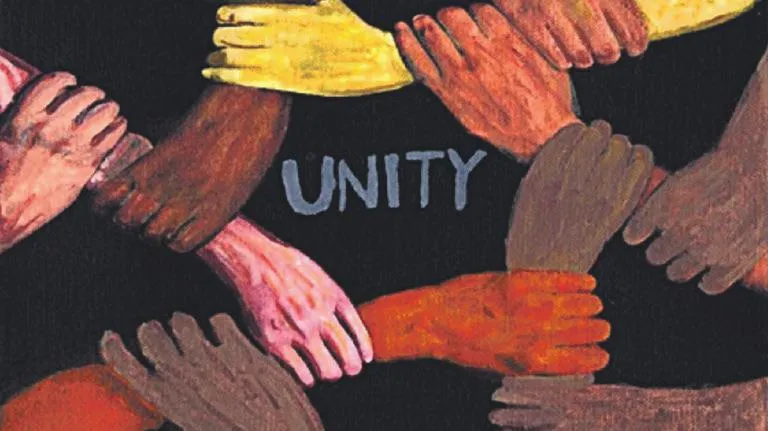
What is evangelical unity and does it matter? And anyway, who’s to say what an evangelical actually is, and even then, what would visible evangelical unity look like?
That was part of our discussion at the autumn meeting of the Affinity Council – a group of leaders from churches and Christian organisations that help guide Affinity as we set our priorities.
As we considered the topic together it was clear that the evangelical landscape is complex, to say the least. There are what we might call isolated evangelicals, who have a very limited set of connections with other churches, and lament what is happening in most of the so-called evangelical churches. Then we have the conservative evangelicals of which Affinity members would be an example, along with the Gospel Partnerships and conferences like Word Alive, and probably most of the readers of en!
They are almost all complementarian and practically cessationist. Overlapping with the conservatives would be open evangelicals, who would see conservatives as too narrow and confident in their convictions, and would generally have different views on ministry priorities including gender roles in the church. And finally, the gospel church networks growing out of the charismatic churches birthed in the last 50 years or so along with the re-invigorated traditional Pentecostal denominations and many black and ethnic churches, mostly Pentecostal, whose core theological convictions are deeply conservative and who make up about 25% of evangelicals in the UK.
The evangelical Christian landscape is a diverse group with a spectrum of views across the many networks and denominations. Although there are organisations like Affinity and Evangelical Alliance who can make connections and provide some leadership, and conferences that can visibly express unity within certain tribes, there is no central authority or agreement on priorities. Does this matter? Do we think all these evangelicals should be visibly united?
In one sense, we don’t need to do anything. Unity is not something we do, but something we are. We have an essential unity as God’s people, all saved by faith in Christ and under the lordship of King Jesus. But our conclusion at Affinity was that, out of obedience to Christ, and for the sake of our mission and witness, we should take every opportunity to show the world we are united in love with all believers, especially those who share the same geographical space.
Be realistic and discerning
As we strive for unity, we know that on this side of glory some differences are hard to reconcile. A complementarian cannot easily endorse and promote events with women preachers. Cessationists and cautious continuationists will find it hard to endure charismatic phenomena that they do not accept as valid. But if we go for the line of least offence, the charismatic egalitarians might feel like they are being asked to repress themselves and their ministry, while conservatives are being validated. Similarly, paedobaptist and credo-baptist practices are not usually possible to accommodate in one church. We also will weigh issues differently as to whether certain issues are of primary or secondary (or even tertiary) importance.
So we need to accept that close working and worshipping together might not be a realistic option. We may have to judge that certain churches or organisations may have the label evangelical, but in reality they are preaching another gospel.
So have realistic expectations, but don’t set the bar too low. We can express unity in the way we meet, talk and work with our brothers and sisters in the evangelical movement.
Often in a town or village, it is possible to set up a fellowship group (or fraternity) so leaders can be aware of what’s going on, build relationships of trust and pray for each other and their locality. They might also be able to work together on school’s ministry, run a foodbank, or campaign on some local political issue.
Speak up as one voice
There are many issues in contemporary society where Christians want to speak up. We believe the Bible gives us the best plan for human flourishing and that the redeemed community must be salt and light. So we will want to speak up and sometimes campaign. Not for our freedom of speech, although that is a good thing, but because we love our neighbours we want to tell them the gospel and call them to follow Jesus as Lord. We know this is the best way to live. Often by grouping together we are more likely to be given opportunities to be heard. That has been my experience in Affinity as we speak up on behalf of over 1,200 evangelical churches and Christian agencies.
We can also get involved with national organisations who campaign, and those who have a heart for mission, and across the evangelical divides we can work shoulder to shoulder with a shared purpose.
Be generous in your assessment of other groups
Where other evangelical groups are doing good work for the sake of the gospel and for the glory of Christ, give thanks to God, pray for them, endorse and encourage them. We can be so competitive, and so insecure, that we don’t want to celebrate the achievements of those who are not in our tribe. This is not honouring Christ, the head of all the church.
In terms of the work of Affinity, for now we continue to do these things: Create fellowship links between national leaders; Provide resources shared amongst many different groups; Speak up for evangelical Christianity in the public square – through media and politics.
Political turbulence... How do we respond?
Earlier this morning, Sir Keir Starmer gave his emotional resignation speech. At any time, this is big news. A few …