
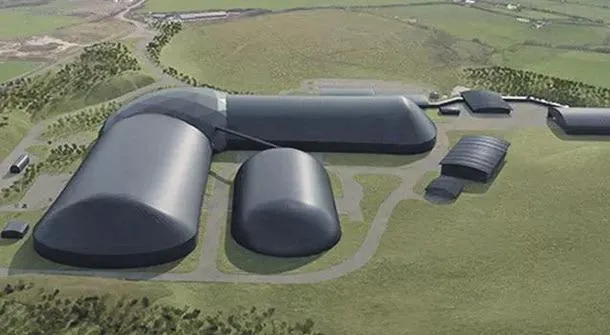
A few weeks before Christmas, controversy exploded in the environmental world when the government gave planning permission for a coalmine in Whitehaven, Cumbria. It would be the first new coalmine in the country in 30 years.
Now the UK would not be what it is today without coal, a bountiful source of concentrated energy which has been exploited since Roman times. Plentiful supplies powered the Industrial Revolution and led to the creation of close-knit mining communities from the South Wales Valleys to the Clyde.
The industry experienced a long decline in the 20th century, not helped by militant strikes in the 1970s and 80s. I was reminded of this recently by the BBC series Sherwood, which focused on the bitter divisions created by the strike in the Nottinghamshire coalfield.
Methodism flourished in the mining communities. As a student in the mid-1980s I remember taking a Sunday service in a chapel with a tiny congregation in Tow Law, in the heart of the Durham coalfield, at around the time of the year-long miners’ strike.
Whitehaven, like many former mining communities these days, is economically depressed and is in dire need of what the government currently calls ‘levelling up’.
To dig or not to dig?
But is it simply a question to dig or not to dig? The story illustrates the kind of difficult decisions that have to be made for the future of the planet.
The fundamental problem is that fossil fuels are a major contributor to climate change, and coal is the dirtiest fossil fuel. In order to stand any reasonable chance of reaching the global target to keep average global temperature rise to 1.5°C, we simply have to keep fossil fuels in the ground and reduce our economies’ addiction to them.
Arguments have raged about whether Whitehaven is an exception because the coal is coking coal for use by the steel industry, which isn’t so easy to decarbonise as the energy sector, and whether it’s better to have domestic sources of supply rather than import it. It gets technical very quickly, but to me it seems terribly simple at heart: if you don’t dig it up, you can’t burn it, and if you do dig it up, it makes no difference to the climate why you burn it. The bottom line is that extracting more fossil fuels to burn it just makes the job of keeping creation’s climate within safe limits that much harder.
The timing of the decision was much delayed due to potential embarrassment to the government in advance of the climate summit at Sharm el Sheikh, but it’s still had a serious impact on the UK’s reputation for climate leadership. Alok Sharma MP, who chaired the Glasgow climate summit in 2021, has been one of a number of vocal critics.
Alternative choices
It’s not even as if there are no alternatives, so I understand, for the steel industry. Green technologies also provide jobs, as other economically depressed areas are finding. The offshore wind industry is growing apace, for example.
What caught my eye as a town planner was that both the inspector who held the planning inquiry and the Secretary of State who made the final decision decided that they could only take into account the carbon emissions arising from the construction and operation of the mine, not the ones coming from the burning of the coal. That seems to me a very short-sighted view in the midst of a climate crisis.
Economic revival and creation care needn’t be in opposition, even though it often seems that way. Sometimes our legal and policy frameworks seem to stop us from making the best decision. The moral of this story is that creation care needs us to see the bigger picture and be more ingenious in finding solutions to the problems we face which work for both communities and creation.




I'm a Christian, and I'm Green - here's why
en does not support any one particular party. However, we are interested in evangelicals within each of our political …