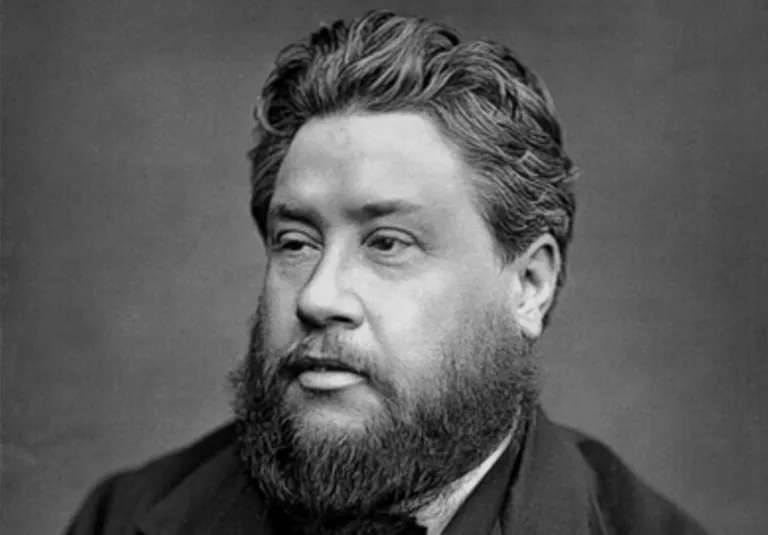
Hugh Dunlop Brown’s (1858–1918) friendship with C.H. Spurgeon through the desperate days of the Downgrade Controversy over the Scriptures in the 1880s made him a witness to the toll that this controversy took on the London Baptist minister.
The Downgrade Controversy was when Spurgeon aired concerns about the Baptist Union in relation to Scripture, the atonement, hell and universalism. He withdrew from the denomination in 1887 as a result.
In 1898, six years after Spurgeon’s death, Brown wrote an article on Spurgeon for a denominational newspaper, setting out the effect the stress of the time had on the great preacher. As Brown recalled:
‘I have seen him walk to and fro in a perfect agony of soul, praying, hoping for some loophole of escape, some way of linking peace with honour, but none appeared, and to him, God’s will being paramount, right through antagonisms and friendships alike he went for Christ and His glory…’
Not surprisingly, a dozen years after his English friend’s death, having seen the effect of that controversy on him, Brown published a work extolling the verbal, plenary inspiration of the Bible. As he peered into the future, he saw this as the key battle that would rage in the new century:
‘Beyond all doubt, the great battle of the twentieth century must rage around the Inspiration of the Word of God. Has the Almighty really spoken to erring mortals? Or are we mere derelicts, tossed to and fro upon the ocean of life’s enigmas, without a chart or compass? Beside this issue, all other questions, however important, dwarf into comparative insignificance. For if the Bible goes, all vanishes; our preaching is vain, our faith is also vain, we are yet in our sins.’
Patent throughout the nearly 400 page book, is Brown’s conviction that the embrace of views that undermine confidence in the divine authorship of the Scriptures is a direct affront to the authority of Christ, who ‘never fails to express unstaggering belief’ in the Old Testament. To accept any other view, Brown asserted, is to cast a direct vote of censure upon the claims and utterances of our Divine Redeemer Himself. ‘Aut Christus aut nullus’ [‘Either Christ or nothing’] must therefore in the present conflict be the war-cry and rallying point of all those who love our Lord Jesus Christ in sincerity and truth.
It is noteworthy that in the year that Spurgeon died, 1892, Brown founded what would become Irish Baptist College. Did he fear for the future of Spurgeon’s College now that Spurgeon was dead and thus the need for a school that was solid in its evangelical witness? Whatever the case, Brown opened the doors of the Irish Baptist Training Institute that year. Among other things, it was to be a witness to the verbal, plenary inspiration of the Scriptures.
Brown was rightly convinced that a college like the one he had founded ‘cannot manufacture ministers; true preachers, like poets, must be born from above. Give us of your men, those whom you have found in the Churches, already evidencing the hallmark of a Divine Ordination, in the gifts of their ministry and in soul winning’.
Irish Baptist College, now based in Moira in Co. Down in Northern Ireland, celebrates its 130th anniversary this year. The divine blessing that has attended it since the days of Hugh Brown and still remains is surely owing in part to the solid commitment to the inerrancy of the Scriptures that Brown emphasised in his ministry and that has continued to mark the school. But Brown would want us to remember that all blessings ultimately are not rooted in human faithfulness but emanate from the fidelity of the Triune God. As he urged Irish Baptists in 1914, on the eve of World War I and the fierce struggles that would rip his beloved Ireland apart: ‘God will lead His Baptist people on until, by grace victorious, our Island Home shines as an Emerald in the Crown of our Divine Redeemer. ’
Should the CofE pay slavery reparations?
During a recent trip to Ghana, Archbishop of Canterbury Sarah Mullally renewed her commitment to a £100 million reparation fund …