Indulgences make us think of the time of the Reformation. Some may think of indulgences as a matter of the past, relating to the days of Martin Luther, and not be aware that the Roman Catholic Church has been offering them since, and is still offering them today.
In the teaching of the Catholic Church, an indulgence is ‘a way to reduce the amount of punishment one has to undergo for sins’ according to Catholic author, Edward Peters.
The recipient of an indulgence must perform an action to receive it. This is most often the saying (once, or many times) of a specified prayer, but may also include the visiting of a particular place, or the performance of specific good works.
Practically, it is a ‘work’ that needs to be done in order to receive a benefit from the Church that cuts the time to be spent in Purgatory to be purified before entering heaven. Martin Luther and the whole Protestant Reformation strongly opposed indulgences, rightly seeing them as a denial of the gospel that we are forgiven of our sins by God Himself through the sufficient and complete work of Christ.
Pope Francis
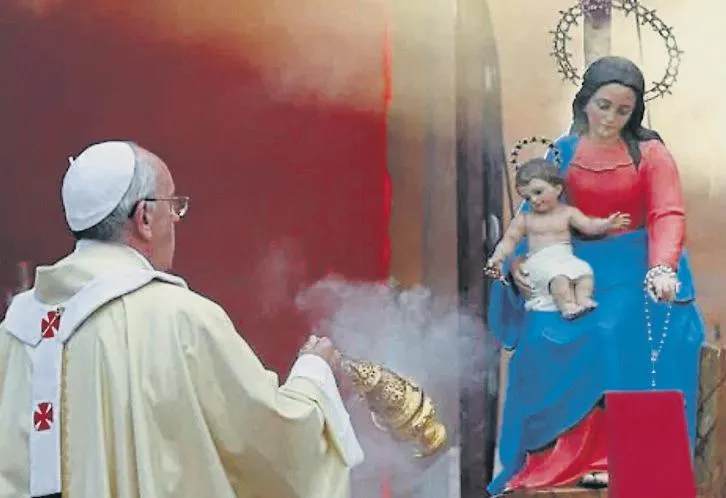
In this time of pandemic, Pope Francis granted plenary indulgences to ‘the faithful suffering from Covid-19 disease, as well as to healthcare workers, family members and all those who in any capacity, including through prayer, care for them’ (20 March 2020). The Pope even offered an outpouring of this medieval practice to those who listened to a special vigil of prayer (live from TV sets, the Internet, etc.) that took place on 27 March when he imparted a special blessing.
Indulgences granted by St Joseph
The most recent offer of indulgences is related to the year that Pope Francis inaugurated on 8 December to celebrate St Joseph, the legal father of Jesus. ‘During this period, the faithful will have the opportunity to commit themselves with prayer and good works, to obtain, with the help of St Joseph, comfort and relief from the serious human and social tribulations that besiege the contemporary world today’. Moreover, ‘Everyone who entrusts their daily activity to the protection of St Joseph, and every faithful who invokes the intercession of St Joseph so that those seeking work can find dignifying work, can also obtain the plenary indulgence’.
The basis for the Catholic Church to teach its members to call for the help of St Joseph, Mary and the saints is twofold. On the one hand it is grounded on a weird interpretation of what is proclaimed in the Apostles’ Creed in Article 9: ‘We believe in the communion of the saints’. For Catholics, that ‘communion’ is extended to the dead and allows communication to them in terms of prayers and petitions addressed to them. On the other hand, it is based on the Catholic view of the saints who, because of their heroic witness, can be ‘mediators’ between God and humanity. Both teachings are Biblically wrong: our fellowship with those who have preceded us in glory is spiritual until resurrection comes, and we are never commanded to pray to the dead. It is actually forbidden by Scripture to have anything to do with the realm of the dead (Deut. 18:10-12). Plus, we have a living and loving intercessor in the person of Jesus Christ who perfectly hears our prayers (Heb. 4:15-16) and who is perfectly qualified to be the only mediator between God and us (1 Tim. 2:5). If we don’t know what to pray and how to pray, we have the Holy Spirit who helps us to pray (Rom. 8:26).
What is at stake
Indulgences are a medieval invention that have nothing to do with Scripture. They stem from a work-based view of salvation whereby we must do something to have our sins removed from us (e.g. reciting certain prayers, making certain pilgrimages, crossing the holy doors, in the past paying an amount of money to buy them). They derive from a faulty view of the church, which claims to administer God’s grace by way of opening up the ‘treasury of merits’ earned by the saints and made available by the Roman Church on special occasions. There is no Scriptural support for these claims. The forgiveness of our sins is a gift that comes to us by grace alone and it is grounded on the accomplished work of the Lord Jesus Christ who has paid the full penalty for our sins (1 John 2:1-2). Thanking God, we can go directly to the Father’s throne in the name of the Son and by the power of the Holy Spirit. Somehow we should keep on nailing the 95 theses; they are as relevant today as they were in 1517.