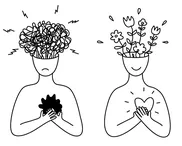
‘If I’d known how much time I was going to spend sobbing on the bathroom floor, I would have bought different tiles!’ So shared a friend on social media last year.
Was she suffering from depression? Experiencing grief? No – a spiritually mature, emotionally healthy, physically fit woman. So why the endless tears?
It’s not a popular topic – it’s one that will make some recoil – but with identity, marriage and ministry challenges stemming from its existence, the menopause is something we can’t ignore.
At its core, it’s a perfectly natural biological process. Oestrogen levels gradually reduce, ovulation comes to an end and eventually a woman’s monthly periods cease. For some, this time of life (usually between 45–55, though occasionally much earlier) can proceed with few adverse effects. For others, the symptoms overwhelm.
Is this a matter for the church? Well, yes. No suffering should be ignored by the body of Christ. We need ‘spurring on’ and encouragement to keep our ‘eyes fixed on Jesus’ in every context. But what’s this context actually like?
Kate and Jo
Meet Kate – happily married, but things at home are becoming tough. She used to show patience with her children, but now the slightest provocation reduces her to anger or tears. She used to enjoy sexual intimacy, but now being with her husband physically hurts. As a result, she’s pulling away from her family – they’re feeling rejected, angry and confused. She wants to honour Christ but Bible times have drifted – she’s exhausted by nights interrupted by sweats and anxiety dreams – and she wonders if her marriage and faith will survive.
Or Jo – she’s embodied contentment in singleness for decades, but now sobs every time she goes past the creche. She’s started to watch porn – something that both draws and revolts. She can’t believe this drive to be a mum has appeared just as her fertility ‘dies’, but it hurts more than she can say. She’s shrouded in regret and doesn’t know where to turn.
Real people, in real congregations, who need help working out the Hebrews 3 call – to keep their hearts soft to the Lord today – when hormones seem to be shouting louder than anything else.
How can a church help?
It’s difficult (and probably unwise!) to approach a middle-aged woman and ask about her hormones, but there is much a church can do to help people navigate the menopause in ways that are godly and wise.
The first is undoubtedly awareness-raising. Whether that’s a well-placed book on the bookstall, an illustration in a talk or an evening set aside to discuss how to persevere through the changes well, knowing that the subject is not being swept under the carpet can be an immeasurable help to women and men alike. Opportunities for deeper discussion and encouragement can follow on: Titus 2 relationships are often seen as middle-aged women discipling the young, but there’s a great need for women in their 60s – 80s to be getting alongside those in their 50s to discuss how growth in godliness can be encouraged. Peer support groups (maybe WhatsApp) where challenges can be shared and biblical encouragement offered can be a wonderful spur. Naturally, a trip to the GP is always to be recommended – Hormone Replacement Therapy is helpful for some. And, of course, prayer can only ever be a source of comfort and hope.
But what about God’s word? Maybe the Romans 8, ‘nothing can separate’ verses have particular poignancy here. Our salvation does not depend on us feeling like ‘us’ but on him being ‘Him’. Remembering our identity is in Christ not our reproductive capacity can lead us back to Ephesians 1. Reflecting on imagery such as ‘Shepherd’ and ‘King’ can remind us that the difficult years are not outside God’s purposes or care. Looking at the calls to contentment in all circumstances and self-control – and reminders that the tough times can sometimes expose our previously hidden desires – are challenges to be offered alongside confidence in Christ’s comfort and sustaining hand.
The menopause is no block to the Spirit’s sanctifying work, it’s another context for His immeasurable power to shape us, to His glory. When Christians help each other to remember that, hope amid the hormones can flourish and grow.