en reviews a BBC2 programme on today's gender ideology and negative stereotypes
My interest was piqued.
From the programme’s title (clips still available on the BBC iPlayer), No More Boys and Girls: Can Our Kids Go Gender Free?, one would be forgiven for thinking that this was another attempt at removing every trace of gender from society.
If one has a view on gender that is rooted in the idea that only boys can be police chiefs and girls can’t wear trousers, then yes, the programme was just that. However, if one has more biblical definitions of gender, where women are able to run a business and men are able to express emotion (Proverbs 31.16, John 11.35), then this programme was only a challenge to those who underestimate the abilities of both boys and girls in emotion and attainment.
Challenging the children
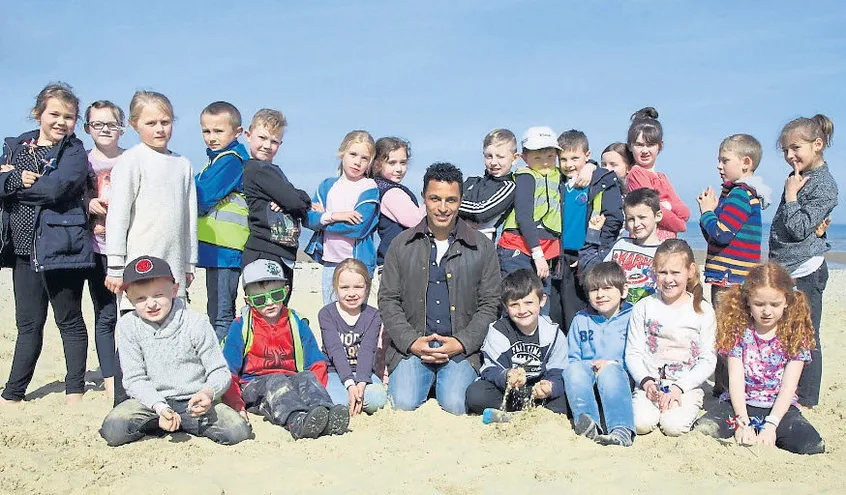
Dr Mohamed Javid Abdelmoneim, an Al Jazeera presenter who has worked around the world with Médecins Sans Frontières, fronted the two-week series charting the way a group of children change when gender stereotypes are challenged in the classroom and at home.
The children were aged seven and lived on the Isle of Wight. They were given assessments at the start of the project to measure their self-esteem and to see how they described boys and girls. This was repeated at the end of the project. The class next to them were given the same assessments and used as a ‘control group’ against which to measure the results. Few girls could accurately assess their abilities in the classroom, with most underestimating their achievements. Boys couldn’t provide alternative words to describe emotions such as ‘happy’, but could vividly describe ‘anger’.
At home, two children were picked for their extreme expression of what boys and girls like to play with. Their parents were asked to cleanse their bedrooms of heavily gendered toys. This mostly involved purging the girl’s room of all things pink and pointless.
Assessing abilities
The classroom then had activities and signage added to it to help the children become more equal in their ideas of attainment and skills. The children loved it, the teacher grew to love it, and by the end of the project they all became much better at assessing their abilities. Some parents understood that giving a child a T-shirt emblazoned ‘Here comes trouble’ is not helpful. The girls finally realised that they could aim to become anything they wanted to be, rather than settle for being nothing more than ‘pretty’.
Putting aside the issues this writer has with the class teacher (who had been edited to be shown as a very weak teacher, which was probably done purposefully for the benefit of the audience), the programme encouraged children to stop categorising jobs into ‘boy ones’ and ‘girl ones’ and become better at maths and emotions.
What the programme also revealed was that giving the children ungendered loos was universally disliked. Removing gender was only in the title. What the series was really about was removing negative stereotyping that turns boys to violence as they can’t express themselves, and girls to hide their God-given skills. The programme highlighted the need for good teaching and parenting to help girls achieve and boys express emotions well, with which no-one could disagree.
Gender really matters
But, the idea that gender doesn’t matter in any area of life is plainly nonsensical. Research shows that children’s brains up to age seven are similar and very easy to mould. Which is where the whole issue of gender and relationships education in schools – for children of that age it will be compulsory – becomes rather contentious. It will lead to more distress in young children and adults, and not produce healthier people, if children are taught that gender is purely a social construct.
The subtext of the BBC programme was that gender is dangerous and to be decon-structed. Many of us do not conform to social stereotypes (en November 2017, ‘Tea-time gender questions’) in clothing, action or skills. But this does not negate, on a fundamental level, God-created gender. This subtext problem is also true for the thinking behind changes in clothing promotion in stores. Wearing a green dinosaur-printed dress as a girl is not a problem (John Lewis clothing promotion January 2016). But perhaps the re-branding of the children’s clothes labels ‘boy/girl’ and ‘girl/boy’ where the former label might be on a skirt, isn’t just about helping parents find decent-fitting trousers for a girl. (Much mentioned complaints regarding trousers for girls are that they are cut too low and slip down when the child moves about and plays, and pockets are tiny or non-existent.) Many will happily purchase a boy’s department blue ‘future scientist’ shirt for a girl, which is likely to fit her correctly unlike the skimpy, tight t-shirts produced for girls with ‘beautiful’ splattered all over them. But there is a huge gap between that and subtly suggesting that a flouncy dress is suitable attire for a boy.
But this runs deeper than clothing. This is about acquiescing to an agenda that will bring misery to many.
On 1 November, Lord Winston, Professor at Imperial College London and Professor Gary Butler of UCH London, debated the problems around reassignment surgery. In an excellent interview on the BBC Radio 4 Today programme, a woman talked of regretting taking hormone injections. Winston expressed concern about the ‘horrendous’ results in many post-operative cases. Butler noted that just one in 20,000 children experience gender confusion. This equates to just 550 children in the UK, which is around a quarter of the number referred to clinics in 2016. With both noting that so little is known about causes and best treatment, Winston suggesting influences at conception may even be a primary cause of gender dysphoria. He noted that doctors must consider if they are doing ‘good not harm’.
Research has been stifled that dares suggest that post-operative people are unhappy (en November 2017, 'Vital research not allowed’), and non-conforming organisations have been shut down.1
Common sense rejected
In 2016 one such incident took place. The Child Youth and Family Gender Identity Clinic (GIC) in Toronto, Canada, headed up by Dr Kenneth Zucker was shut down due, in essence, to the 65-year-old’s decades-long work not matching the ideology of just accepting that every child who says they think they are the wrong gender must be correct. Zucker instead suggested that ‘messages from family, peers and society do a huge amount of the work of helping form, reinforce, and solidify gender identities, and that at young ages these identities tend to be quite malleable. There’s great potential for confusion.’2
‘The assessment process [at GIC] was rather comprehensive, usually three visits entailing in-depth psychological evaluations of patient and parents alike. Parents were sometimes encouraged to tweak family tendencies and habits that could be contributing to their child’s distress, which ruffled some feathers. (The idea that a child with gender dysphoria even needs a full psychological examination is now seen as inappropriate by some.)’3
Voices of reason are being drowned out by the noise of the ideological bandwagon hurtling along, scooping up unthinking people. Worryingly, if there are professionals being put of work because they are both supportive of surgery and of recognising that for many ‘it really is just a phase’ and refusing to ‘do surgery’ on them as it’s not right or necessary, then one can expect lots more ‘no more boys and girls’ to be heard.
FOOTNOTES:
1. http://nymag.com/scienceofus/2016/02/fight-over-trans-kids-got-a-researcher-fired.html 2. 2012 Journal of Homosexuality: ‘A Developmental, Biopsychosocial Model for the Treatment of Children with Gender Identity Disorder’. 3. Ibid