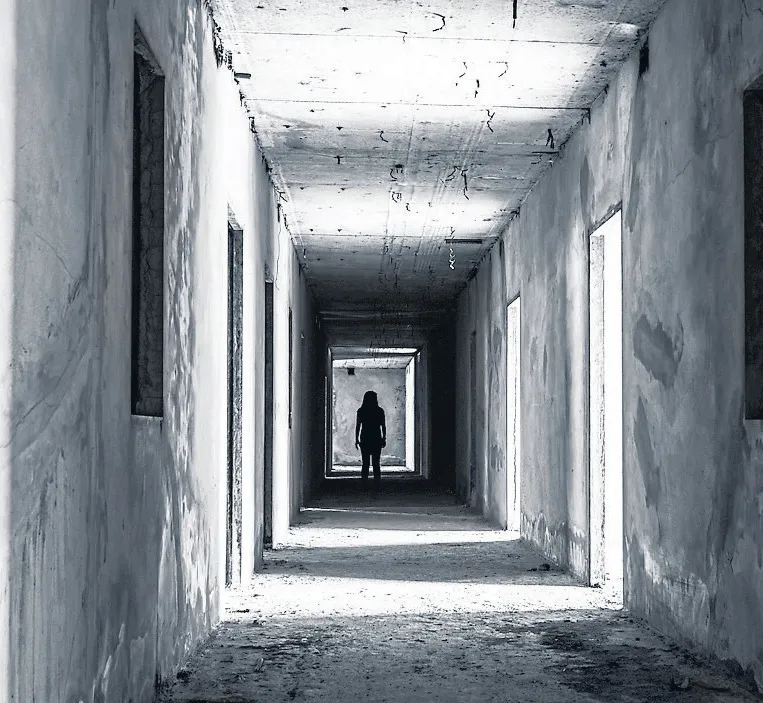
In a 2014 YouGov poll, 34% of Britons claimed to believe in ghosts.
That is in the context of only 23% who described themselves as religious. Secularism does not seem to be shaking the deep-rooted conviction that there is more to reality than meets the eye.
The earliest stories in the world include accounts of ghosts. The Epic of Gilgamesh, set in the Middle East, includes a meeting of its hero with an appearance of his dead friend Enkidu. Shakespeare’s Hamlet and Charles Dicken’s A Christmas Carol continued to reference this widespread belief. Ghosts are not the exclusive preserve of any particular religion. Buddhist literature includes an entire realm of ghosts, Islam refers to the ‘jinn’ and the Hebrew Bible includes an appearance of a ghost (1 Samuel 28).
They’re everywhere!
Ghosts litter television and Hollywood. Major movies like Sixth Sense and Ghostbusters either fascinate us or trivialise the topic, while the TV series Ghost Hunters keeps a steady diet of ghost stories in popular culture. Perhaps the most common story told around a late-night camp fire will involve some strange encounter with the paranormal.
In one sense, the popular belief in ghosts reminds us that secularism may be skin deep. However, with many claims regarding ghosts the sceptics have a field day.
Scepticism
Gullibility and naivety are clearly on display. TV documentaries in search of Britain’s ‘most haunted houses’ only seem to confirm our sceptical instincts. However, by their very nature it may be that genuine paranormal encounters are just not susceptible to empirical testing. Modern science is built on an empirical method that requires repeatable tests, measurable results and comparable controls. Claims regarding the paranormal are outside the realm of the normal. For all the frauds and delusions, there can be no absolute proof that no such encounters occur. In fact, some anecdotes do arise from credible sources and it would seem that not every story is lightly dismissed.
Spirit beings
The Bible makes reference to various spirit beings (most famously, angels and demons). It also provides accounts of appearances of people after they had died (Samuel in 1 Samuel 28; Elijah and Moses in Mark 9). There are also examples of people being mistaken for ghosts (Mark 6.49; Acts 12.15). A ghost need only mean a ‘spirit’, which is why in older forms of English the Holy Spirit was referred to as the Holy Ghost. The Bible refers to evil spirits too, offering a demonic explanation for some supernatural claims.
Warnings
The Bible was not so much written to deny such paranormal activity as to warn people about it (Deuteronomy 18.10-12). It can lead to an unhealthy fascination. Some may be duped, others may be more thoughtful, but a preoccupation with ghosts can become harmful. In many ways, it does not really matter whether we can explain what ghosts are, what matters more is how we deal with this possibility.
The materialist worldview of many atheists leads them to deny the supernatural realm. But the Christian worldview does not compel us to endorse every claim. We too can exercise a healthy scepticism while also taking such claims seriously. The worldview of the Bible shares the common sense view of most people, in most of history, from most cultures: there is more to creation than meets the eye. Perhaps Western scientists will one day find aspects of quantum mechanics that explain some experiences of ghosts. Reality is greater than we have yet imagined. But in that vaster realm there are forces of evil too, and the Bible also warns us of an unhealthy preoccupation. Instead, the preoccupation with ghosts may be a continuing sign that an age may be characterised as ‘nonreligious’ but remaining very open minded toward the supernatural. Rather than being stumped on this subject, the Bible reveals to us all we need to know about this supernatural realm and provides plenty of insights to explain ghostly phenomena.