Apologetics benefits from the careful, scholarly evaluation of archaeological sites and discoveries.
Of course, there are great gaps in our knowledge of the ancient world. Sometimes these gaps reflect erosion of the past, deliberate destruction or theft. They may also reflect contemporary politics and culture.
City of David and Jericho
A good case in point is the archaeology of the Holy Land. Any traveller interested in the archaeology of this land will be immediately struck by the contrast between sites in the modern state of Israel and those in the Palestinian West Bank. The state-of-the-art, beautifully displayed City of David site which includes Hezekiah’s Tunnel, makes the Tel of ancient Jericho seem like a barren wasteland – ‘the ugliest Tel in the Holy Land’ as guides will often point out.
This leads to a disparity in the evidential value of the two locations. The City of David location offers clear evidence for David, Hezekiah and the Pool of Siloam from the time of Jesus. In contrast, debates over the value of Jericho for the OT events remain inconclusive. This contrast partly reflects economics and politics: the Palestinian economy has less to invest in the relative luxury of archaeology and scholarship.
Temple Mount
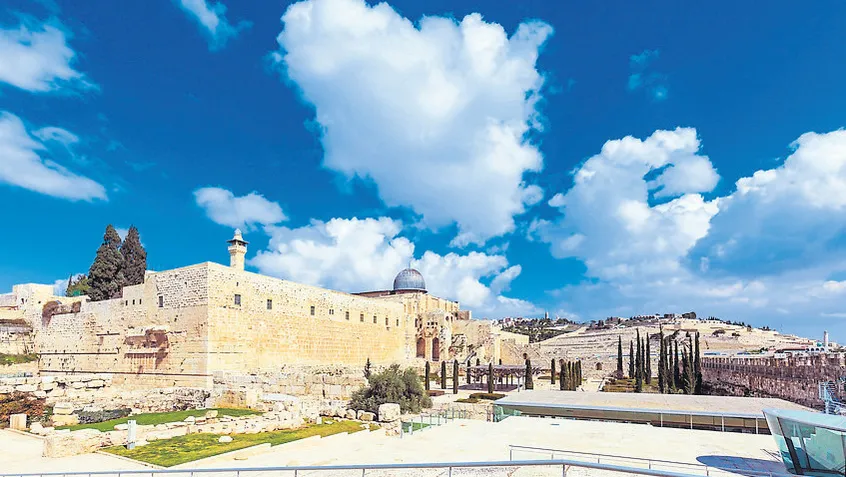
However, religious factors also have a bearing on the interest taken in archaeology. The Temple Mount in Jerusalem is managed by the Islamic Waqf which is a kind of religious endowment. This highly sensitive site, known to Muslims as the Haram al-Sharif, is of historical value to all the Abrahamic faiths. For Christians and Jews it is important as the location of Mount Moriah and the Temple of Solomon. For Muslims it is their third holiest site, location of the Dome of the Rock and the al-Aqsa Mosque. You might have thought that the archaeology of this location would be of interest to everyone?
Many Muslims fear archaeological investigation in the area as an attempt to undermine their holy site and they have no desire to support Jewish historical claims. So archaeological investigation is not permitted. When in 1999 the Waqf wished to carry out significant building work in the south-east corner of the Temple Mount they brought in heavy earth-moving equipment. In complete disregard of the rich archaeological history of the location many tons of earth were excavated and dumped in the nearby Kidron Valley.
Archaeology in the dump
Archaeologists in Israel took note and a project was proposed (it took years to gain approval!) in which the earth would be wet sifted in order to retrieve the fragments of history otherwise lost. Of course, as an archaeological dig it is deeply frustrating. There are no levels, or ‘strata’ which would normally provide the relative dating for objects that are found. The intriguing finds have all lost their historical context.
Despite these difficulties the project has produced an impressive collection of discoveries, dating to almost every period of Jerusalem’s varied history. Coins, arrowheads, seals and pottery shards are all among the finds. Students from Moorlands College took part with me a few years ago and among the discoveries was a fragment of the earliest ceramic tiles used to decorate the Dome on the Rock. Even Islamic history is benefitting from this ongoing project.
Tiles from Herod’s day
However, news has recently been made with an astonishing collection of tiles that have been pieced together from the debris. Dating from the time of King Herod, these have been identified as floor tiles from the Second Temple courtyard. They are beautifully decorated and finely cut, a form of tile a notch above mosaic tiles that we are familiar with from Roman sites. They pose the question: if the floor tiles were this elaborate and expensive, how much more grand and majestic would the temple have been?
Discoveries like these continue to confirm the biblical record and add colour to our reading of the Bible (John 2.20). But they also remind us that archaeology is not a neutral discipline. It unfolds in a world of political agendas, mistrust and suspicion.