Up to the 18th century, theologians regularly considered the concept of beauty to be central to any discussion of God.
As these theologians read the Bible, especially the Hebrew Scriptures, they were struck by various places where God is described as beautiful.
God’s beauty in Scripture
In Psalm 27.4, for example, the Psalmist asserts, ‘one thing I have desired of the Lord, that will I seek after: that I may dwell in the house of the Lord all the days of my life, to behold the beauty of the Lord’. Here, beauty is ascribed to God as a way of expressing the Psalmist’s conviction that the face-to-face vision of God is the profoundest experience available to a human being. Again, in Psalm 145.5 the Psalmist states, that he will speak ‘of the glorious honour’ or beauty of God’s majesty. Similarly, the 8th-century BC prophet Isaiah can predict that there is coming a day when God will be ‘a crown of glory and … a diadem of beauty’ to his people (Isaiah 28.5).
The most important biblical concept in this connection is probably that of ‘glory.’ When used with reference to God it emphasises his greatness, transcendence, splendour and holiness. God is thus said to be clothed with glory (Psalm 104.1), and his works full of his glory (Psalm 111.3). The created realm, the product of his hands, speaks of this glory day after day (Psalm 19.1–2).
But it is especially in his redemptive activity on the plane of history that his glory is revealed. The glory manifested in this activity is to be proclaimed throughout all the earth (Psalm 96.3), so that one day ‘the earth shall be filled with the knowledge of the glory of the Lord’ (Habbakuk 2.14).
In other words, it was their encounter with God on the plane of history that enabled the biblical authors to see God’s beauty and loveliness shining through the created realm.
Augustine on divine beauty
Christian theologians built upon these biblical foundations. The 4th-century North African thinker Augustine (354–430), for instance, identifies God and beauty in a famous prayer from his Confessions: ‘I have learnt to love you late, Beauty at once so ancient and so new! I have learnt to love you late! You were within me, and I was in the world outside myself. I searched for you outside myself and, disfigured as I was, I fell upon the lovely things of your creation… The beautiful things of this world kept me from you and yet, if they had not been in you, they would have had no being at all.’
The material realm is only beautiful because it derives both its being and beauty from the One who is Beauty itself, namely, God. Augustine intimates that if he had been properly attendant to the derivative beauty of the world he would have been led to its divine source.
Edwards and the beauty of God
As one enters the modern era, a profound reconstruction takes place in thinking about beauty in general. The watershed is the 18th century, when there is a dramatic movement away from the question of the nature of beauty to a focus upon the perceiver’s experience of the beautiful. The perception of beauty now becomes the basic concept in the writing and thinking about this subject. And it is intriguing that there is a corresponding diminution of interest in the ascription of beauty to God.
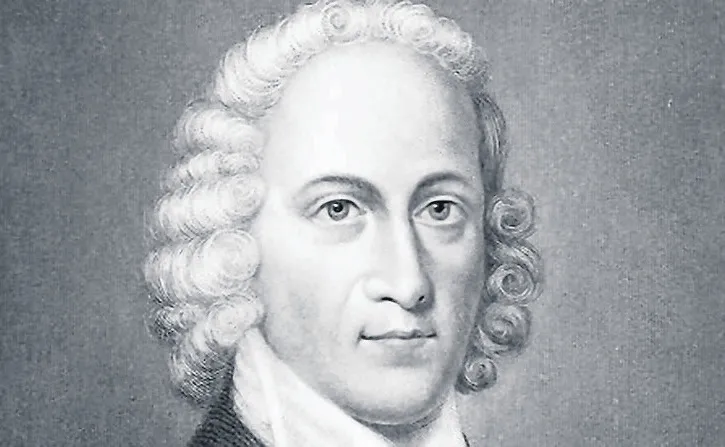
Nevertheless, one can still find vital representatives of the older tradition. One such figure is the New England theologian, Jonathan Edwards (1703–1758), who stands at the centre of 18th-century evangelical spirituality and who was deeply conversant with earlier theological thought, especially that of the Augustinian tradition.
There is no doubt that beauty is a central and defining category in Edwards’s thinking about God. He regards beauty as a key distinguishing feature of the divine being: ‘God is God,’ he writes in his Religious Affections, ‘and distinguished from all other beings, and exalted above ’em, chiefly by his divine beauty, which is infinitely diverse from all other beauty’. Unlike creatures who receive their beauty from another, namely God, it is ‘peculiar to God’, Edwards writes elsewhere, ‘that He has beauty within Himself’. Edwards’ conception of divine beauty thus serves to accentuate the biblical idea of the uniqueness and transcendence of God.