The signpost to God

Chris Sinkinson  |  Features  |  defending our faith
Date posted:  1 Aug 2015
Share Add       
The signpost to God

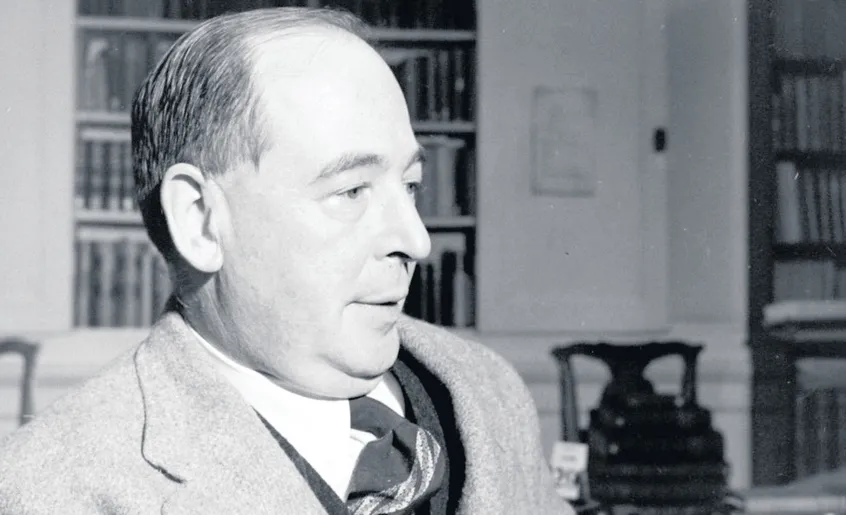
C.S. Lewis makes the argument that moral order points to God

Is it ever okay to lie?

Should I tell a lie at work so that my colleague can keep a job and provide for a family? Ethical questions like this one abound every day. How we resolve them will reflect what we think about moral values. Are moral values objective facts or subjective choices? This is a fundamental issue in ethical debate and dilemmas.

It is very striking over the past few years how Western governments have driven steamrollers over complex moral debates and crushed reasonable dissent. This has been particularly evident in the way that same sex marriage has been handled. It is only an example of a much deeper issue concerning moral reasoning. The implications are disturbing.

Defence of Marriage Act

In 1996 President Bill Clinton, hardly a moral conservative, signed the Defence of Marriage Act which prohibited federal recognition of gay marriage. However, individual states could permit such marriages. By 2013, 36 states were licensing gay marriages. Now in 2015 the state overturned the previous prohibition and all states must recognise gay marriage. What changed over the past two decades for such turn around in public policy? Was it a new moral argument that overturned centuries of understanding?

John Holbrook, a London barrister, identified the heart of the American debate in these words: ‘The argument in favour of gay marriage is based on therapy. It is based on an approach that seeks to reorder public policy in line with the subjective desires of individuals.’ Public policy must conform to what we ‘want’ or how we ‘feel’ rather than what is right or true. In other words it is not that any moral argument has been won but that societies’ view of morality has changed.

Holbrook points out that this was dramatically displayed by President Barak Obama who described the ruling as a decision that ‘affirms what millions of Americans already believe in their hearts’. Perhaps Bill Clinton had voted with his head in 1996, but today we are to vote with our hearts?

The language of therapy

The problem with settling moral disputes by ‘therapy’ is that it casts anyone who disagrees as cruel or a bigot. Who are we to hurt others and not respect their feelings or desires? We no longer ask whether we are doing the right thing but only whether we feel good about it. The language of therapy short-circuits reasonable debate. This is happening in every area of moral discourse. David Wells, in his book God in the Wasteland, provides a number of startling legal examples. These include an FBI agent fired for embezzling government funds (theft?) who was later reinstated because he claimed his love of money was a form of ‘handicap’ for which he was being discriminated against. In a similar vein a school employee who had frequently been late for work mounted a legal challenge to their dismissal claiming that they were suffering from ‘chronic lateness syndrome’.

Our task in apologetics is not to simply try and demonstrate why one course of behaviour is right and another is wrong. We have the more fundamental task of trying to show that behaviour cannot simply be determined by our personal wants and desires.

C.S. Lewis gave a brilliant demolition of such subjectivism in his wartime radio broadcasts published as Mere Christianity. ‘Whenever you find a man who says he does not believe in a real Right and Wrong, you will find the same man going back on this a moment later. He may break his promise to you, but if you try breaking one to him he will be complaining “It’s not fair” before you can say Jack Robinson.’ This standard of fairness is a moral absolute. Right and wrong are not determined by feelings or desires.

But if there is an objective moral order then there is more to this universe than pure, material matter. That may be the real reason why so many of our atheist critics are in favour of a therapeutic culture. If they can undermine the idea that there is an objective moral order then they deface this signpost that points us to God. But we have only just begun to see the consequences for public policy. The future of ethical debates does not look promising.

Share
< Previous article| Features| Next article >
Read more articles by Chris Sinkinson >>
Features
In the footsteps of David

In the footsteps of David

Generally, the further back in time the harder it is to prove that something has happened. We regularly report in …

Features
The Bible and Iran

The Bible and Iran

As bombs fall and a dangerous regime plunges the region into chaos, it might seem trivial to write an article …

New here?

Register and get three free articles each month!

Register

Give a subscription

Our monthly newspaper is the perfect gift for those who love to think deeply

Give here