Covid, the courts and the Magna Carta

David Shepherd  |  Comment
Date posted:  1 Sep 2020
Share Add       
Covid, the courts and the Magna Carta

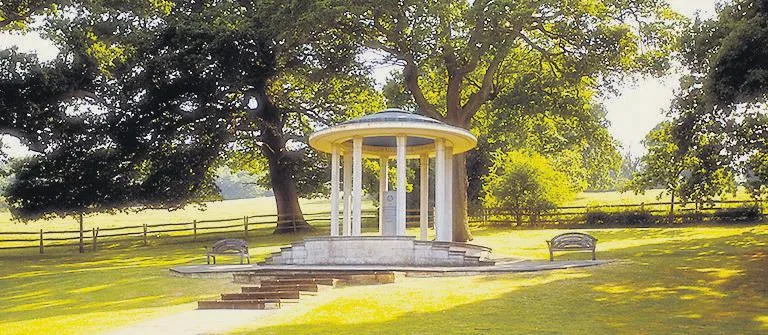
Memorial in Runnymede commemorates the sealing of Magna Carta in 1215 by King John | photo: iStock

A few weeks ago, a group of 25 church leaders, supported by the Christian Legal Centre, filed a legal action challenging the government’s lockdown of churches as an unconstitutional invasion of church liberties.

In their pre-action letter, lawyers acting on behalf of the group cited Clause 1 of the Magna Carta as an unrevoked guarantee of religious freedom for the church: ‘that the Church of England shall be free and shall have all her whole Rights and Liberties inviolable.’

However, University of Chicago Law School’s Professor Richard H. Helmholz has explained that, while Clause 1 was historically ‘designed immediately to secure the English church’s freedom in the choice of its own bishops and abbots’, it also ‘suffered from the ‘deplorably vague’ character of its words’.

Importantly, he notes that, whereas that clause was mostly invoked as the basis for recovering customary payments to the clergy (e.g. the mortuary fee), ‘it was not used to reach all kinds of speech or action that seemed to threaten the medieval church’s interests... Nor was [the] Magna Carta invoked in routine prosecutions for interference or contempt of ecclesiastical jurisdiction.’

That said, the pre-action letter also shows that the Magna Carta is not central to the churches’ complaint. Instead, they have adopted ‘proportionality’ and ‘ultra vires’ arguments that bear a striking resemblance to those which were successfully upheld by the recent judgment of the Council of State in France.

In that case, the French Government’s decree on 11 May had maintained a blanket ban on church gatherings, but it was deemed disproportionate when compared to the same decree permitting gatherings of less than ten people in other places open to the public.

In contrast, the aforementioned pre-action letter states that: ‘In summary, our clients contend that the relevant Regulations are:

a. disproportionate in the circumstances where the overwhelming majority of churches had closed down voluntarily in response to the coronavirus pandemic, and the remainder had introduced far-reaching precautions against infection; and

b. ultra vires the Health Secretary’s powers under Public Health (Control of Disease) Act 1984.’

The claimants wrote: ‘Our clients do not for a moment suggest that churches should be allowed to operate as before notwithstanding the coronavirus epidemic. Rather, our clients’ concern is that, as a matter of principle, the imposition of appropriate anti-epidemic measures in the church is ultimately a matter for church authorities rather than secular state authorities.’ So, they are certainly not arguing that ‘lockdown’ restrictions per se constitute an illegitimate interference in their religious freedom (as some evangelical commentators have suggested).

As evidence of the swift response of churches to the pandemic and the Prime Minister’s televised address, the letter also explains that, by 23 March, the Roman Catholic Church had already suspended public worship, and the Church of England had closed its churches.

In World War II, the Church of England’s Church Assembly, in coordination with the Emergency Powers Act, autonomously and readily passed primary legislation via a National Emergency Precautions measure to close churches in evacuated areas. This measure quickly secured Parliamentary approval and Royal Assent.

Therefore, it’s unclear why, on this occasion, the Church of England issued its guidance without also passing an emergency measure. Also, at first sight, the government’s resort to secondary legislation (i.e. regulations which do not involve heightened Parliamentary scrutiny) to impose a ban on church gatherings does appear to warrant judicial review.

In Britain, the Articles of the European Convention on Human Rights are protected by the Human Rights Act 1998. And although a British Bill of Rights replacing this legislation was part of the Conservative government’s 2015 election manifesto, the government has explained that, post-Brexit, current European Court (CJEU) case law will be preserved.

So, it may well be found that the government’s interference pursued a legitimate aim but was disproportionate to that aim.

Human rights jurisprudence has repeatedly recognised religious freedom as individual adherence to propositional belief, with less focus on freedom of religious practice. So, my disagreement with this legal action is that it unduly prioritises the latter (e.g. it states that ‘neither confessional Christian faith nor the church as an institution can faithfully exist without a Lord’s Day gathering’).

The claimants may come to regret that emphasis in their complaint.

Share
< Previous article| Comment| Next article >
Read more articles by David Shepherd >>
Comment
The moral case against slavery reparations

The moral case against slavery reparations

Last December, as reported by The Sunday Times, the Shadow Home Office Minister Katie Lam and 26 other MPs …

Comment
Pretend patriots versus true patriotism

Pretend patriots versus true patriotism

Remembrance earlier this month is more than a ritual; it is a sacred covenant that binds generations. For the British …

Give a subscription

Our monthly newspaper is the perfect gift for those who love to think deeply

Give here

About en

Our vision, values and history

Read more