Gender Recognition Act – speak up

en staff  |  UK & Ireland
Date posted:  1 Sep 2018
Share Add       
Gender Recognition Act – speak up

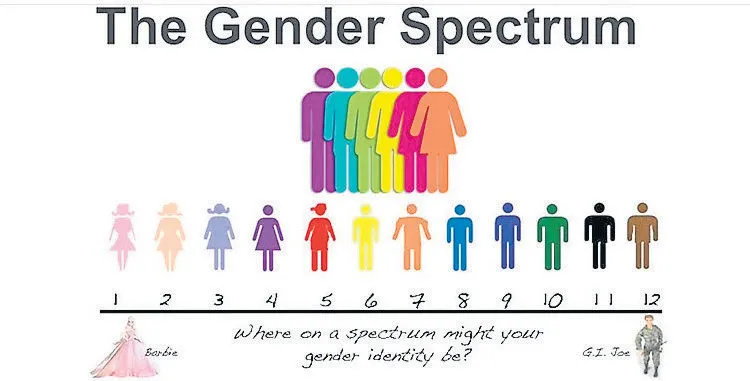
A chart used by Mermaids UK in schools and with other public sector services

The government opened a consultation in July, closing on 19 October, on changes to the Gender Recognition Act, which seeks to allow people to self-identify as transgender without having to make any formal declaration.

Many groups including Christians, feminists and lesbians, are greatly concerned about the dramatic effect upon society the legal changes would bring. They believe that women’s rights achieved over many decades will be rolled back. Women who have tried to meet together to discuss the impact of trans issues have experienced violence and found venues in which to meet almost impossible to come by (en July 2018).

The consultation can be accessed via the link, or completed by post1. An accompanying document is summarised prior to each question. Question No.22, the last, allows for free comment on the topic.

The government states that: ‘This consultation does not consider the question of whether trans people exist…have the right to legally change their gender, or whether it is right for a person of any age to identify with another gender. Trans people already have the right to legally change their gender, and there is no suggestion of this right being removed.’

Stripped of meaning

The government says it won’t make any changes to the Equalities Act whereby women are allowed to have specific ‘women only’ spaces e.g. for changing. The concept of female-only spaces is stripped of meaning when a pre-surgery male will be allowed, as is currently the case, to use a female-only changing room, lead a Girl Guide Group or share female sleeping spaces.

The document continues: ‘Being trans is not a mental illness. The World Health Organisation ensures [it]… is no longer classed under ‘Mental and Behavioural Disorders’.’ But the concept that ‘if I feel female, then I am female’, and the splitting of gender from ‘birth sex’ is biologically flawed. People are born with chromosomes XX or XY and this gender-defining combination is in every human cell. Even the BBC GCSE revision guides still include the statement ‘a human baby’s gender is determined by the sperm… carrying a Y or X chromosome’.2 Biology and genetics says a person cannot be a gender different to their sex, but this has become a statement that even a doctor cannot repeat freely (see the front page of this edition of en).

Deeply concerning is the stifling of research into the numbers of people who want to re-transition. en (November 2017) reported on a doctor wanting this to be researched, but no university wanted to sponsor the research due to it being ‘out of step’ with society. 3

Convenience for today?

The government notes that almost half of the people who could have applied for gender recognition certificates under the current system said they did not satisfy the requirements. This means almost half of the trans people responding to a survey, who would now be able to ‘change gender’ under the proposed new system, haven’t: lived as a trans person for two years; taken medication/ had any treatment to modify their body; planned to live forever as the new gender; had a medical report about their gender dys-phoria. If someone hasn’t reached this current set of criteria, then one could argue that a choice of convenience for today is being made, rather than a life-changing decision which has been well thought through.

The government states: ‘We urge all those who engage with this issue and respond to this consultation to treat each other respectfully. Abuse or hurtful comments are not acceptable.’ Using derogatory terms about people who have been made in the image of God is unkind. People who struggle with trans issues are brothers in Adam, and it should be our prayer that they will become brothers in Christ. If by filling in the form the love of Christ is demonstrated then, no matter what the outcome of the consultation, Christ has been honoured.

Footnotes

Share
< Previous article| UK & Ireland| Next article >
Read more articles by en staff >>
Features
'Radical discipleship' – ten questions with Karen Soole

'Radical discipleship' – ten questions with Karen Soole

Karen Soole is a writer, speaker, and women’s worker at Trinity Church, Lancaster. She is the chair of the Northern …

UK & Ireland
Knife crime plan hope

Knife crime plan hope

The gospel is bringing hope in the midst of rising knife crime, London City Mission (LCM) says.The capital-based outreach …

Subscribe

Enjoy our monthly paper and full online access for just £40/year

Find out more

Need to advertise?

We can help you reach Christians across the country

Find out more