Preparing for the ear

John Woods  |  Reviews
Date posted:  1 Sep 2015
Share Add       
Preparing for the ear

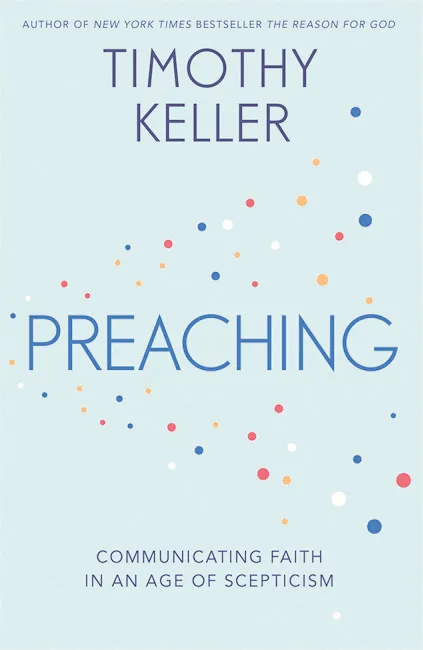
PREACHING
Communicating the Faith in an Age of
Scepticism
By Timothy Keller
Hodder and Stoughton. 309 pages. £16.99
ISBN 978 1 444 702 170

For those familiar with Tim Keller there will be little that surprises in this book on preaching.

Much of the material in the main body of the book has been delivered at Gordon Cornwall Seminary in 2006 and Reformed Seminary Jackson in 2014 and is available in video versions online. Keller has been talking and writing on preaching in one way or another for years. What is particularly useful about this book is that it brings together all the strands of his thinking about the subject in one accessible place.

Manifesto

Keller refers to this book as a ‘manifesto’ rather than a ‘manual’ (although he cannot resist providing a mini-manual on the mechanics of preaching in an appendix! This has the added bonus of reminding preachers that we are preparing for an oral event and not writing an essay. The preacher writes a sermon for the ear, not the eye.) Keller wants to gain our attention and help the contemporary preacher see the possibilities for preaching effectively in an age that is likely to sneer at preaching both for its style and content.

The book begins by asking the question: ‘What is good preaching?’ The exploration of this question provides a clue to what makes Keller effective as a preacher: he is more than the sum of his parts. What constitutes good preaching is often rather subjective; grasping the essence of good preaching is like trying to dissect a fragrance. I was particularly taken with the distinction between a good sermon and good preaching: the former might impress and inform, the latter penetrates and transforms. The rest of the book is divided into three parts.

Heart of preaching

The first section addresses the message at the heart of preaching. In this section Keller lays out his thesis that preaching should be a clear communication of God’s Word that presents the gospel and helps people discover their true identity, rescue and freedom in Christ. Keller is really helpful on how we can preach Christ from all of the Scriptures. His stress that this is less about learning a technique and more about developing an instinct is a vital one to grasp. By listening to Keller’s sermons and reading some of his books we can see how he practices what he preaches. This is an essential antidote to the notion that preaching is merely teaching the Bible; for Keller information transfer, or getting through the text, is never enough. Keller wants to get the gospel of Christ into our DNA, pumping through our bloodstream, so that we can connect to the heart of the hearer who desperately needs all that Christ offers.

Engaging the hearer

The second section deals with how we can effectively engage the hearer in the act of preaching. In conservative evangelical thinking about preaching the hearer has perhaps become the most neglected subject! Keller tackles those who object to the idea of con-textualization, by arguing that we need to ‘adapt in order to confront’ our hearers with the truth. For Keller this is not a superficial attempt to be relevant. It is a careful, painstaking and compassionate attempt to lift the lid on how people, think, feel and choose. Keller explores the various ways in which preachers can engage with the thought forms, narratives, questions, objections and aspirations of contemporary society.

Keller is especially helpful in exploring how we address the questions behind the questions people ask and how we anticipate the barriers that are erected against the gospel. Yet, in a key chapter ‘Preaching Christ to the Heart’, Keller makes the crucial point that preaching to a secular world is not merely about winning the argument; it is about addressing the heart. Keller does not mean by this that preaching has to engage in some sentimental tugging of the hearer’s heartstrings. Instead Keller, building on Jonathan Edwards’ concept of the Religious Affections, alerts us to the importance of connection with truth as a whole person. For Keller, believing in Christ is more than shaping intellectual opinion, it is encouraging a spiritual experience. The aim of preaching is to help the hearer both see and feel the truth of the gospel. This, suggests Keller, calls for a nimble, imaginative and varied approach to presenting and applying the gospel to the hearer.

Need of the Spirit

The third section of the book is the chapter ‘Preaching and the Spirit’. It is a case of last but not least for Keller. This is not a perfunctory add-on; it takes us to the heart of Keller the preacher. Keller reminds us that we preach that Christ is great because with a believing, prayerful, adoring, worshipping heart the preacher revels in the greatness of Christ. It is in this practical dependence on the Spirit of God that Keller as a preacher is more than the sum of his parts. As Keller reminds us: ‘Prepare the preacher more than you prepare the sermon’.

Expository straight-jacket

It is worth mentioning that the endnotes are more than references to books quoted. They are a treasure trove of Keller’s influences, workings and musings; don’t skip them. They contain the bare bones of a book yet to be written. In some of the extended notes Keller explores some of the limitations of the exploratory method. For example Keller writes that:’ The concept of the ‘big idea’ within the text... is a bit artificial’, adding ‘We must be careful of a kind of ‘expository legalism’ – in which it is assumed that there can only be one exegetically accurate sermon and sermon theme on any one passage’ (p.250). In addition Keller gives an example of what a couple of years of sermons at Redeemer might look like, has a fascinating discussion on the development of Jonathan Edwards sermons when preaching to American Indians and engages in a significant way with key figures from the New Homiletics spectrum.

In the main body of the book Keller somewhat briefly dismisses the contribution of Fred Craddock and with him the whole New Homiletic enterprise that he represented. In the extensive footnotes, Keller graciously redresses the balance by engaging at length with Fred Craddock, Thomas Long and Eugene Lowry, recognising that there needs to be a conversation between Old and New Homiletics. Keller is in some ways something of a hybrid as a preacher. His sermon outlines are fairly predictable and represent an adapted form of a traditional three- point sermon. Yet he has grasped and uses insights concerning preaching the literary forms of Scripture, the value of narrative and the importance of imaginative word pictures in communicating truth. Maybe this is one of the most important things that Keller can teach us. As we work within our tradition we must learn to listen to those who are outside it, doing so in such a way that we challenge our own tradition and develop in the process.

My suggestion is: read the main body of the book in one go. Read the notes carefully then re-visit and digest the main body of the book in a second reading.

Hard work required

Keller is shaped by his context. This book, although rooted in biblical principles, does come from the United States, New York, and in particular Manhattan. Some of the suggestions for engagement with the secular mind (i.e. authors cited) might play better in the US or in a big city rather than more generally. It is interesting that Keller dedicates the book to his first church, which was based in Virginia. He is aware of the differences that exist in various contexts. Readers of this book will need to do some work in transposing Keller’s insightful reading of the human condition into the vocabulary, cultural expression and pressure points of their own settings.

You will not become an effective preacher simply by reading this book. Yet, if you allow yourself to be gripped by what motivates this manifesto, you will grow as a person and as a preacher.

Share
< Previous article| Reviews| Next article >
Read more articles by John Woods >>
Reviews
Preaching: Sensitive and targeted

Preaching: Sensitive and targeted

Richard Coekin writes about his reasons for writing this book, which include observing applications in sermons that are not carefully …

Reviews
How to look after yourself

How to look after yourself

I begin most of my emails with the statement: “Trust you are well.” Most of us are happy when we …

Looking for a job?

Browse all our current job adverts

Search

Give a subscription

Our monthly newspaper is the perfect gift for those who love to think deeply

Give here