Evangelicals Now
Christian news worldwide
magnifying glass Search archives
home Home check the archives Archives Subscribe Subscriptions Advertising Information & booking of classifieds Adverts Find a local evangelical Church Find a church for the search engines and extremely curious! About us Contact us Site Map
Printable
Version

Darwin and the fossils

Views on the importance of the fossil record to the theory of evolution have varied between the experts (palaeontologists) over the years.

Some, like Stephen J. Gould, have even used the problems of the fossil record to propose different evolutionary approaches to those held by the Darwinists. Darwin and his followers believe that the fossil record can be used to demonstrate the gradual change in the pattern of living plants and animals over time. Gould and his supporters have argued that evolution has not changed in small steps but through sudden (on a geological time-scale!) large leaps forward.

Related to the flood

There is, of course, no direct statement in the Bible concerning fossils and so we are free to explore all possible explanations that are consistent with the biblical history of the world. One mistake often made by Christians is to confuse the fossil record with the creation account. Clearly they are not speaking about the same event. The biblical account of creation is about the spontaneous generation of life at God’s command. It is described as good and there is clearly harmony and no agony or sickness, etc.
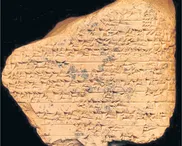
The fossil record is the opposite of these things and reminds us of God’s judgment. Fossils are frequently formed by the rapid burial of living creatures rather than the slow burial of dead ones. Creationists, therefore, relate the record directly or indirectly to the global flood in the days of Noah. But the detail is still a matter of debate among them as a recently published symposium demonstrates.

Darwin’s discouragement

To Darwin, the record should have given him great encouragement but, he wrote, ‘ ... [Since] innumerable transitional forms must have existed, why do we not find them imbedded in countless numbers in the crust of the earth? Why is not every geological formation and every stratum full of such intermediate links? Geology assuredly does not reveal any such finely graduated organic chain; and this perhaps is the most obvious and gravest objection which can be urged against my theory’ (Charles Darwin, Origin of Species, J.W. Burrow, ed., pp. 206, 292).

Of course, and reasonably from his perspective, Darwin expected the problem to be resolved in the coming century by new discoveries. As Gould explains in his writings, this has not been the case. The record is still discouraging.

Transitional fossils?

In 2008, Prof. Donald Prothero wrote an article in the New Scientist seeking to demonstrate that there are no missing links; we have clear records of transitions for all the animal sequences proposed by the evolutionist. Unfortunately for him, his arguments are less strong than he claimed.

Creationists accept that there is and has been change within the families (kinds, to use the biblical terminology) of creatures. We believe that God created each kind with the potential to adapt to environmental changes. So Prothero is wrong to say that change within the triceratops family of dinosaurs has any significance to the argument.

We also see creatures that may be described as mosaics: they have a mixture of features characteristic of different classes of creature. One example is the platypus. This has features associated with the reptiles and the mammals. Prothero refers to the ‘fishbians’ (e.g. the tiktaalik) as transitions between the aquatic and terrestrial creatures. But such creatures are not evidence of evolution, but of design for specific environmental conditions. The distinctive organs are present and complete; not partial and evolving.

Giraffes and okapis

It is important, too, to consider the whole animal and not just changes in one organ or structure. Prothero claims that the giraffe evolved from the okapi. Aside from the fact that both species are known and there is no sign of evolution between them, there are many critical changes required. The longer neck requires stronger muscles to support it. A much larger heart is needed to pump the blood up to the brain. Then there has to be the simultaneous development of protective systems to allow the giraffe to lower its neck in order to drink without suffering brain damage from the huge blood pressure. These and many other changes have to occur together to account for such a supposed evolution.

Rhinos and horses

Certainly we see common features between distinct families of creatures, but this does not prove a common origin. They can equally well be explained by economies of design. Prothero falls into this trap, for example, by his reference to rhinos and horses evolving from a common ancestor. They are assigned as perissodactyls (‘odd-toed ungulates’), but this does not prove common ancestry and there is no evidence for this. His arguments are based on changes within the rhino family, which we have seen is development within a kind.

Darwin’s concern about the fossil record still stands, in spite of the attempts of his scientific descendents to demonstrate otherwise. The fossil record, on the other hand, has a strong message to us. The scientific evidence speaks of catastrophic destruction. Within the biblical context, we see this as a warning of the judgment of God. Referring back to the Flood, Peter points out that this is a warning of a greater judgment yet to come (2 Peter 3).

John Peet